If your tooth only hurts “sometimes,” you might think it’s nothing. However, that occasional sensitivity, mild ache, or dark spot could be a warning from your tooth, alerting you early on.
You don’t always need a toothache to have a cavity. In fact, some of the most damaging cavities don’t hurt at all until they become expensive, painful, and unavoidable.
That’s why in this article, I’ll explain how to spot cavity symptoms early so you can prevent them from spreading.
Key Takeaway: How to Know If I Have a Cavity?
Cavities can develop without pain, especially in their early stages, which makes them easy to ignore.
- Early signs include white or dark spots, mild sensitivity, and food getting stuck in the same area.
- Self-checks can help spot warning signs, but only a dentist can confirm and treat cavities.
- Treating cavities early prevents pain, infection, and more complex dental procedures.
How Can I Check Myself for Cavities? (5 Tips)
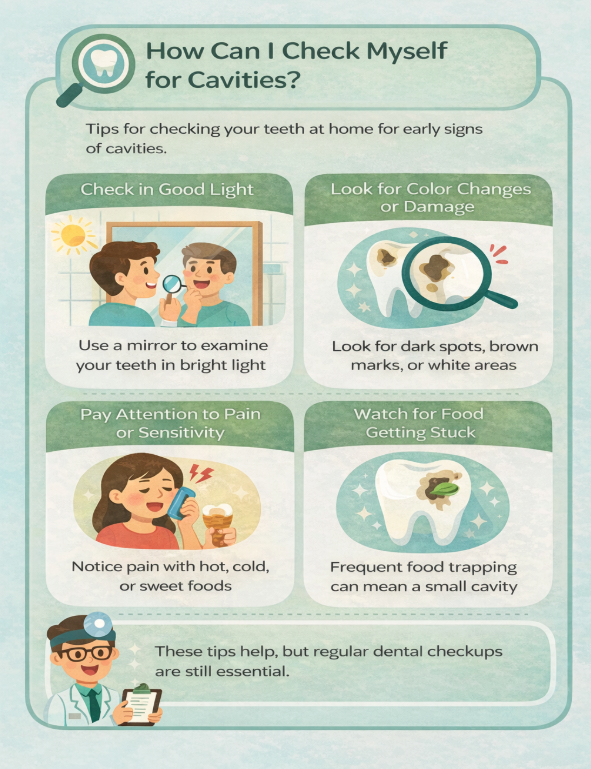
You can’t replace a dentist visit, but you can check your teeth at home for any early signs of cavities. Doing this regularly helps you notice changes before they become serious.
1. Check Your Teeth in Good Light
Stand in a well-lit bathroom or near a window so you can clearly see your teeth. Use a small mirror to look at the back of your teeth and the inside surfaces of your molars.
Take your time and check carefully near the gum line and on chewing surfaces, as cavities often start in these areas.
2. Look for Color Changes or Damage
Healthy teeth look smooth, clean, and even in color. Watch for dark spots, brown marks, or white patches that don’t brush away. These can be early signs of tooth decay.
Gently feel your teeth with your tongue to notice any rough spots, tiny holes, or sharp edges.
3. Pay Attention to Pain or Sensitivity
Notice how your teeth feel when you eat or drink something hot, cold, or sweet. Pain, sensitivity, or discomfort that lasts for a few seconds or more may mean a cavity is forming. Try to remember which tooth feels uncomfortable so you can mention it to your dentist.
4. Watch for Food Getting Stuck
If food keeps getting stuck in the same spot, it may be a sign of a small hole or rough area on the tooth. Cavities can create uneven surfaces that make it easier for food particles to get trapped.
5. Know the Limits of Self-Checking
Some cavities can’t be seen at home, even if you look carefully. They may form between teeth, under fillings, or below the tooth’s surface. Early cavities often cause no pain, which is why regular dental checkups are still important.
What Are the Common Signs & Symptoms of Cavities?
The symptoms you experience depend largely on where the cavity is located and how far the decay has progressed.
A small cavity on a front tooth can feel very different from a deeper one in a back tooth that does most of the chewing. Here are some things to look for:
- Early Signs of a Cavity
At the early stage, you might notice white or chalky spots on your tooth’s surface. These spots indicate that enamel is starting to weaken in that area. That’s the first step of cavity formation.
You may also feel mild sensitivity when eating or drinking something hot, cold, or sweet. This sensitivity usually fades quickly after you remove the trigger.
Many people with early cavities feel nothing at all. The decay simply hasn’t reached the inner layers of the tooth where the nerves are located.
- Moderate Cavity Symptoms
As the cavity grows, you’ll likely develop a toothache that comes and goes. The pain can feel random and may not happen every day.
Biting down or chewing on the affected tooth often becomes uncomfortable. You might find yourself avoiding that tooth without even thinking about it.
Brown or black spots become even more noticeable on the tooth’s surface. These discolorations indicate deeper decay than the early white spots.
- Advanced Cavity Symptoms
Severe cavities cause constant or sharp tooth pain that doesn’t go away. The discomfort can interfere with eating, sleeping, and concentration.
You’ll be able to see visible holes or pits in the affected tooth. The damage becomes obvious, and the area around the tooth may swell or feel tender to the touch. This suggests the decay has reached the tooth’s inner pulp or has caused an infection.
A bad taste in your mouth or bad breath that doesn’t improve with brushing can indicate advanced decay or infection.
Besides, some signs can also point out that you need a root canal. However, a dentist can guide you better by looking at your teeth. You can also check out signs you might need a root canal before visiting a dentist to get a clear idea about your oral health.
How to Temporarily Treat Cavity Pain at Home?
While waiting for your dental appointment, there are a few things you can do to manage discomfort. These methods only offer temporary relief and are not a substitute for professional treatment.
- Rinse with warm salt water. Mix half a teaspoon of salt in 8 ounces of warm water and rinse your mouth several times a day. This helps reduce inflammation and keeps the affected area clean.
- Use toothpaste for sensitive teeth. Switching to a toothpaste designed for sensitivity may help reduce pain. Keep in mind, this only eases discomfort and does not treat the cavity itself.
- Avoid pain-triggering foods and drinks. Stay away from very hot or cold items, and limit sugary foods and drinks that can make cavity pain worse.
These steps can help you stay comfortable for a short time. They buy you some relief until you see a dentist, but they won’t stop the cavity from getting worse or repair the damage. Therefore, make sure to visit a dentist as soon as possible.
Do you know that the type of toothbrush you use for cavity prevention also has a huge impact on your oral health care? Find details within my personal guide (directly from a dentist).
Conclusion
Cavities begin quietly, often without pain or obvious symptoms. This is why awareness of early warning signs matters so much.
Self-checks help you stay informed about your oral health and catch potential problems early. However, only a dentist has the tools and expertise to accurately diagnose cavities and determine the best treatment approach.
Early treatment offers clear advantages: it’s easier, causes less discomfort, and costs less than addressing advanced decay. Regular dental visits combined with good home care give you the best chance of catching cavities when they’re still small and simple to fix.
Frequently Asked Questions (FAQs)
- Does the cavity go away on its own?
No, cavities don’t heal by themselves. Once the enamel is damaged and a cavity forms, it will only get worse without treatment. Very early decay can sometimes be reversed with fluoride treatment, but this requires professional intervention.
- What are the first signs that a cavity is forming?
The first visible sign is often white or chalky spots on the tooth’s surface. These signs indicate that the enamel has weakened. As decay progresses, you might see light brown patches that eventually turn darker.
- How do I know if it’s a cavity or just sensitive teeth?
Sensitivity from worn enamel typically affects multiple teeth and responds quickly to triggers like cold air or ice cream. Cavity pain usually affects one specific tooth, may throb or ache even without triggers, and often worsens over time.
- Can cavities cause bad breath or gum swelling?
Yes, advanced cavities can cause both. When decay creates holes in teeth, bacteria and food particles accumulate, producing odor. If the decay reaches the tooth’s pulp or causes infection, the surrounding gums may swell and become tender.
- When should I see a dentist for possible tooth decay?
See a dentist if you experience tooth pain lasting more than a day, notice visible spots or holes on your teeth, have persistent sensitivity, or see bleeding around a tooth. Even without symptoms, maintain checkups every six months for early detection.