
Braces are one of the most well-known and effective orthodontic treatments used to align teeth and correct bite issues. This guide covers everything you need to know — from the basics of how braces work to their benefits, types, treatment timelines, costs, risks, and real data on their use around the world.
What Are Braces?
Braces are orthodontic appliances used to straighten teeth, correct misalignment, and improve overall dental function. They work by applying gentle, continuous pressure to teeth over time, gradually moving them into better positions.
Braces are most commonly made up of brackets, wires, and bands, but newer materials and technologies have expanded options to include ceramic brackets and nearly invisible alternatives.
Why Are Braces Used?
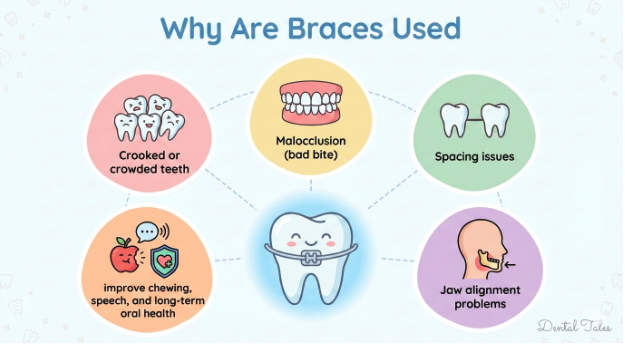
Braces are prescribed for several reasons, including:
- Crooked or crowded teeth
- Malocclusion (bad bite) such as overbite, underbite, crossbite
- Spacing issues (gaps between teeth)
- Jaw alignment problems
- To improve chewing, speech, and long-term oral health
In many cases, orthodontic problems can affect dental cleaning, increase the risk of decay or gum disease, and lead to uneven wear on teeth.
How Do Braces Work?
Braces apply controlled force on the teeth, signaling the bone around the teeth to remodel. This bone remodeling allows teeth to move into new positions over time.
The treatment involves:
- Initial consultation and imaging
- Bracket placement on each tooth
- Archwire insertion connecting brackets
- Periodic adjustments to progress movement
- Retention phase (usually a retainer) after braces are removed
The entire process can take anywhere from 12 to 36 months, depending on severity and individual factors.
Types of Braces
There are several common types of braces available today:
1. Traditional Metal Braces
These are the most common and time-tested braces, made of high-quality stainless steel. They’re durable and effective for most alignment issues.
2. Ceramic Braces
Ceramic brackets are tooth-colored and blend in more with natural teeth, making them less noticeable.
3. Lingual Braces
These braces are attached to the back of the teeth, making them virtually invisible from the front.
4. Clear Aligners vs. Braces
Clear aligners (like Invisalign) are removable plastic trays used in place of traditional braces for many mild or moderate alignment cases. They can be more aesthetic but may not be suitable for all complex treatments.
Braces Cost in India: What to Expect
The cost of braces in India can vary significantly depending on several clinical and practical factors. Unlike fixed pricing products, orthodontic treatment is customized, which means the final cost is influenced by the complexity of the case and the type of braces used.
Understanding the cost structure helps patients set realistic expectations and make informed decisions.
Average Cost of Braces in India (Indicative Ranges)
While exact prices vary by city and provider, the typical cost ranges in India are:
| Metal braces | ₹25,000 – ₹60,000 |
| Ceramic braces | ₹40,000 – ₹1,00,000 |
| Lingual braces | ₹75,000 – ₹2,50,000 |
| Clear aligners | ₹60,000 – ₹3,00,000 |
Important: The above is the average cost, and actual cost can vary based on the city, case, and more.
Factors That Influence Braces Cost
Several elements determine how much braces may cost:
1. Type of Braces
Traditional metal braces are generally the most affordable, while ceramic, lingual, and aligner-based treatments tend to cost more due to materials, customization, and technology involved.
2. Severity of Misalignment
More complex orthodontic issues often require longer treatment durations, additional adjustments, or advanced techniques, which can increase overall cost.
3. Treatment Duration
Braces treatment typically lasts 12 to 36 months. Longer treatments may involve higher follow-up and maintenance costs.
4. City and Location
Costs are usually higher in metro cities compared to smaller towns due to infrastructure, demand, and availability of specialists.
5. Orthodontist’s Experience
Highly experienced orthodontists or specialty clinics may charge more due to expertise and case complexity handling.
What Is Usually Included in the Cost?
In many cases, the quoted braces cost may include:
- Initial consultation and diagnosis
- Braces placement
- Periodic adjustments
- Routine follow-up visits
However, retainers, replacement brackets, emergency visits, or extended treatment time may sometimes be charged separately.
Insurance Coverage in India For Braces
Most dental insurance plans in India do not cover orthodontic treatment, especially when braces are considered elective or cosmetic. Some employer-provided policies may offer partial coverage, but this is still uncommon.
Patients are advised to clarify insurance eligibility before starting treatment.
Is Braces Treatment Worth the Cost?
From a dental health perspective, braces are not solely cosmetic. Correcting alignment can:
- Improve bite function
- Reduce risk of tooth wear
- Support better oral hygiene
- Prevent long-term dental complications
When viewed as a long-term oral health investment, braces can help reduce future dental treatment needs.
Important Cost Consideration
Because every orthodontic case is unique, an in-person evaluation is essential to determine the most accurate cost and treatment plan. Online estimates should always be treated as indicative rather than final.
If you’re unsure which braces option may be suitable or want clarity on treatment expectations, you can use the contact form to seek professional guidance.
How Long Does Treatment Take?
Treatment time varies with age, type, and complexity. On average:
| Mild cases | ~12–18 months |
| Moderate cases | ~18–30 months |
| Complex cases | ~30+ months |
Timing also depends on patient compliance (e.g., keeping appointments and following care instructions).
Who Gets Braces?
Orthodontic treatment isn’t just for kids anymore.
Kids & Teens
Braces are most commonly started in childhood or adolescence, often between ages 10 and 14, when permanent teeth have mostly erupted.
Adults
Adult braces are increasingly common. Globally, adults now make up around one-third of all orthodontic patients in some regions, reflecting a rising trend of adult treatment.
Prevalence of Orthodontic Treatment
Here are key data points:
- An estimated 4 million people in the U.S. are currently wearing braces, including children and adults.
- One in three orthodontic patients can be adults in North America and Canada
- Studies show that up to 67.6% of people under 18 have experienced orthodontic treatment in some populations.
- In India, malocclusion (a leading reason for braces) affects between 12.5% and 33.3% of school-age children.
Benefits of Braces
Braces offer more than cosmetic improvement:
- Better oral hygiene access
- Reduced risk of gum disease and decay
- Improved bite and chewing efficiency
- Enhanced speech clarity
- Reduced wear on individual teeth
- Increased confidence and smile aesthetics
Addressing tooth and jaw alignment can also help prevent TMJ discomfort and uneven pressure on teeth.
Common Myths & Misconceptions About Braces
- “Braces are just cosmetic.”
Truth: While aesthetics matter, braces primarily improve function, health, and long-term dental stability.
- “Only teenagers need braces.”
Truth: Adults benefit just as much, and treatment outcomes are strong across ages.
- “Braces are unbearably painful.”
Truth: Discomfort is usually mild and manageable with proper care and adjustments.
Braces Risks & Considerations
Braces are safe, but possible issues can include:
- Temporary soreness after adjustments
- Difficulty cleaning teeth (requires diligence)
- Risk of white spots if hygiene is poor
- Gum irritation from wires
Choosing the right practitioner and maintaining good oral hygiene reduces risks
Braces Care & Maintenance Tips
To get the best outcomes:
- Brush after each meal
- Floss daily using orthodontic tools
- Avoid sticky, hard, or chewy foods
- Keep regular check-ups and adjustments
After Braces: Retainers & Relapse Prevention
Completing braces treatment is a major milestone, but orthodontic care does not truly end when the braces are removed. Teeth have a natural tendency to shift back toward their original positions, a process known as orthodontic relapse. This is why the retention phase is considered a critical part of braces treatment, not an optional step.
Why Retainers Are Necessary
After braces, the bone and surrounding tissues that hold teeth in place need time to stabilize. Although teeth may look aligned immediately after braces are removed, the supporting structures are still adapting to the new positions. Without retention, this instability can allow teeth to gradually move out of alignment.
Studies show that some degree of relapse is common without proper retainer use, especially within the first 6–12 months after braces.
Types of Retainers
There are several types of retainers used to maintain results after braces:
Removable Retainers
- Hawley retainers (wire + acrylic)
- Clear plastic retainers (similar in appearance to aligners)
These are typically worn full-time initially and then reduced to nighttime use based on orthodontic guidance.
Fixed (Permanent) Retainers
- A thin wire bonded behind the teeth (usually lower front teeth)
- Provides continuous retention without relying on patient compliance
Each type has its advantages, and the choice depends on bite stability, age, and orthodontic risk factors.
How Long Do Retainers Need to Be Worn?
Retention is not always short-term. In many cases:
- Full-time wear is recommended for the first few months
- Night-time wear may continue for several years
- Some individuals may need lifelong nighttime retention to maintain alignment
Teeth can shift even years after treatment due to aging, jaw changes, or tooth loss, making long-term retention essential.
Preventing Relapse Beyond Retainers
Relapse prevention also depends on:
- Consistent oral hygiene
- Regular dental check-ups
- Monitoring wisdom teeth eruption
- Avoiding habits like nail-biting or teeth grinding
Proper retention ensures that the time, effort, and biological changes achieved through braces are preserved over the long term.
Braces in India: Awareness & Access
In India, research shows that although many people notice braces and misalignment, awareness of treatment benefits and early intervention remains limited. This indicates a need for better public education on orthodontic health.
Prevalence of Orthodontic Issues in India
Research indicates that malocclusion is one of the most common dental conditions among Indian children and adolescents, with prevalence rates ranging from 12.5% to over 33% depending on age group and region. Despite this, many cases remain untreated due to late diagnosis or lack of awareness.
Awareness Gaps
Several studies highlight that:
- Many individuals view braces as purely cosmetic, rather than functional
- Awareness of early orthodontic evaluation is limited
- Treatment is often delayed until alignment issues become severe
In rural and semi-urban areas, orthodontic treatment is sometimes perceived as unnecessary unless pain or severe functional problems occur.
Access to Orthodontic Care
Access to braces in India varies based on:
- Geographic location (urban vs rural)
- Availability of trained orthodontists
- Socioeconomic factors
- Cost perception and treatment duration concerns
Urban centers generally offer better access to orthodontic specialists and modern treatment options, while smaller towns may have limited availability.
The Importance of Education & Early Evaluation
Improving orthodontic awareness is essential for better long-term oral health outcomes. Early assessment—often recommended around age 7—can help identify jaw growth issues, spacing concerns, or bite problems before they worsen.
Public education, school dental screenings, and reliable educational resources play a key role in helping individuals understand when braces are medically beneficial, not just cosmetically desirable.
Frequently Asked Questions (FAQs) About Braces in India
Braces may cause mild discomfort or pressure, especially after adjustments. This usually settles within a few days as the mouth adapts.
Most braces treatments last between 12 and 36 months. Duration depends on alignment severity and individual response.
Orthodontic evaluation is often recommended around age 7. However, braces can be effective at any age.
Yes, adults can successfully undergo braces treatment. Treatment may take slightly longer than in children or teens.
No, braces primarily improve bite function and oral health. Aesthetic improvement is a secondary benefit.
Hard, sticky, and very crunchy foods should be avoided. These foods can damage brackets and wires.
Adjustments are usually done every 4 to 6 weeks. These visits help guide proper tooth movement.
Ceramic braces are less visible but may be more fragile. Metal braces are more durable and effective for complex cases.
Temporary speech changes can occur initially. Most people adapt within a short period.
Broken braces components should be repaired promptly. Delays may cause discomfort or slow treatment progress.
Teeth can shift back after braces are removed. Retainers help maintain alignment and prevent relapse.
Retainers are often worn full-time initially, then at night. Some people may need long-term nighttime retention.
Clear aligners suit mild to moderate alignment issues. Braces are often better for complex corrections.
Braces are generally safe when properly managed. Good oral hygiene reduces potential risks.
Signs include crooked teeth, bite issues, or chewing difficulty. A professional evaluation is required for confirmation.