
Clear aligners have emerged as a popular alternative to traditional braces, particularly among adults and image-conscious teenagers, who are looking for a more discreet way to straighten their teeth.
Often, clear aligners are compared to traditional braces in terms of effectiveness and suitability. However, their effectiveness depends on case selection, patient compliance, and proper professional oversight.
This guide will provide youwith a thorough look at how aligners work, who they suit best, what treatment involves, and what costs to expect in India.
Key Takeaway
- Clear aligners are a modern orthodontic solution designed to straighten teeth discreetly and comfortably.
- While they offer strong aesthetic and lifestyle advantages, they are most effective for specific alignment cases and require strict patient compliance for successful outcomes.
What Are Aligners?
Clear aligners are removable orthodontic appliances made from medical-grade thermoplastic material. Unlike fixed braces, which use brackets and wires bonded to teeth, aligners use a series of custom-made, transparent trays that fit snugly over the teeth.
Each aligner in the series is designed to apply controlled pressure on specific teeth, gradually shifting them into better positions. The treatment depends on digital planning technology, where orthodontists or dentists map out the entire tooth movement sequence before fabrication begins.
The core difference between aligners and traditional braces lies in their approach. Braces use continuous force through adjusted wires, while aligners use staged movement through sequential trays. This makes aligners removable for eating and cleaning, though they must be worn consistently to work effectively.
Why Are Aligners Used?
Aligners are prescribed to address several orthodontic concerns, particularly those classified as mild to moderate in severity. Common conditions treated with aligners include:
- Mild to moderate crowding of teeth.
- Spacing issues or gaps between teeth.
- Minor bite irregularities, such as a slight overbite or crossbite.
Beyond alignment correction, aligners can improve oral health by making teeth easier to clean and reducing the risk of uneven wear.
Many patients also choose aligners for lifestyle reasons, valuing the ability to remove them during important social or professional occasions.
However, aligners are not a universal solution. Complex orthodontic cases involving severe bite problems, significant jaw misalignment, or teeth that need substantial rotation often require the precision and control that only fixed braces can provide.
How Do Aligners Work?
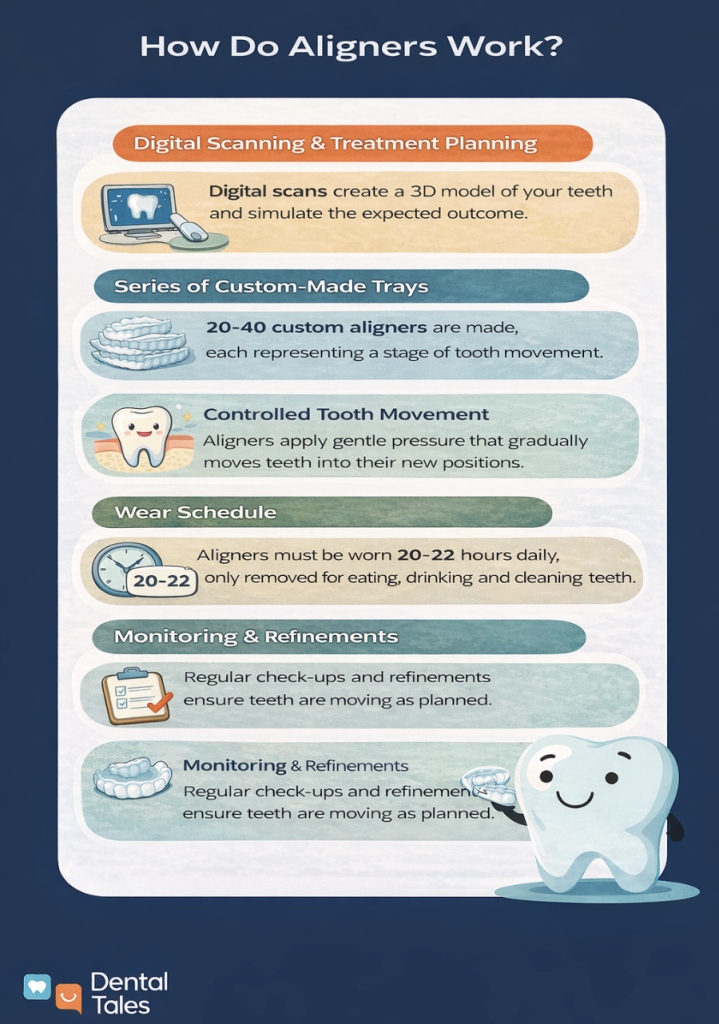
Aligners work by applying controlled, incremental force to teeth, similar to braces, but through staged trays instead of continuous wires. This treatment follows a structured process:
- Digital Scanning and Treatment Planning
The process begins with digital impressions or scans of your teeth. These scans are used to create a three-dimensional model, allowing the orthodontist to simulate the entire treatment digitally and show you the expected outcome before you even start.
- Series of Custom-Made Trays
Based on the treatment plan, a series of aligners is manufactured. Each tray represents a specific stage in the tooth movement sequence. Most patients progress through 20 to 40 sets of aligners, though this varies widely depending on complexity.
- Controlled Tooth Movement
Each aligner is worn for one to two weeks before moving to the next set. The trays apply gentle pressure that triggers bone remodeling, the same biological process used by traditional braces.
- Wear Schedule
For aligners to work effectively, they must be worn 20 to 22 hours per day. This leaves time only for eating, drinking anything other than water, and oral hygiene. Inconsistent wear can stall progress or compromise results.
- Monitoring and Refinements
Regular check-ups, typically every six to eight weeks, allow the dentist or orthodontist to monitor progress. If teeth are not tracking as planned, refinements may be needed, which involve creating additional aligners to correct the course.
Step-by-Step Treatment Process
- Initial Consultation & Diagnosis: Assessment of teeth alignment, bite, and overall oral health to determine if aligners are suitable.
- Digital Impressions and Simulation: Scans are taken, and a virtual treatment plan is created to show projected tooth movement.
- Aligner Delivery and Wear Cycles: You receive your first several sets of aligners with instructions on wear schedule and care.
- Progress Reviews and Mid-Course Corrections: Periodic visits ensure teeth are moving as planned. Adjustments are made if necessary.
- Retention Phase After Aligners: Once treatment is complete, retainers are prescribed to maintain the new alignment and prevent relapse.
Types of Aligners Available
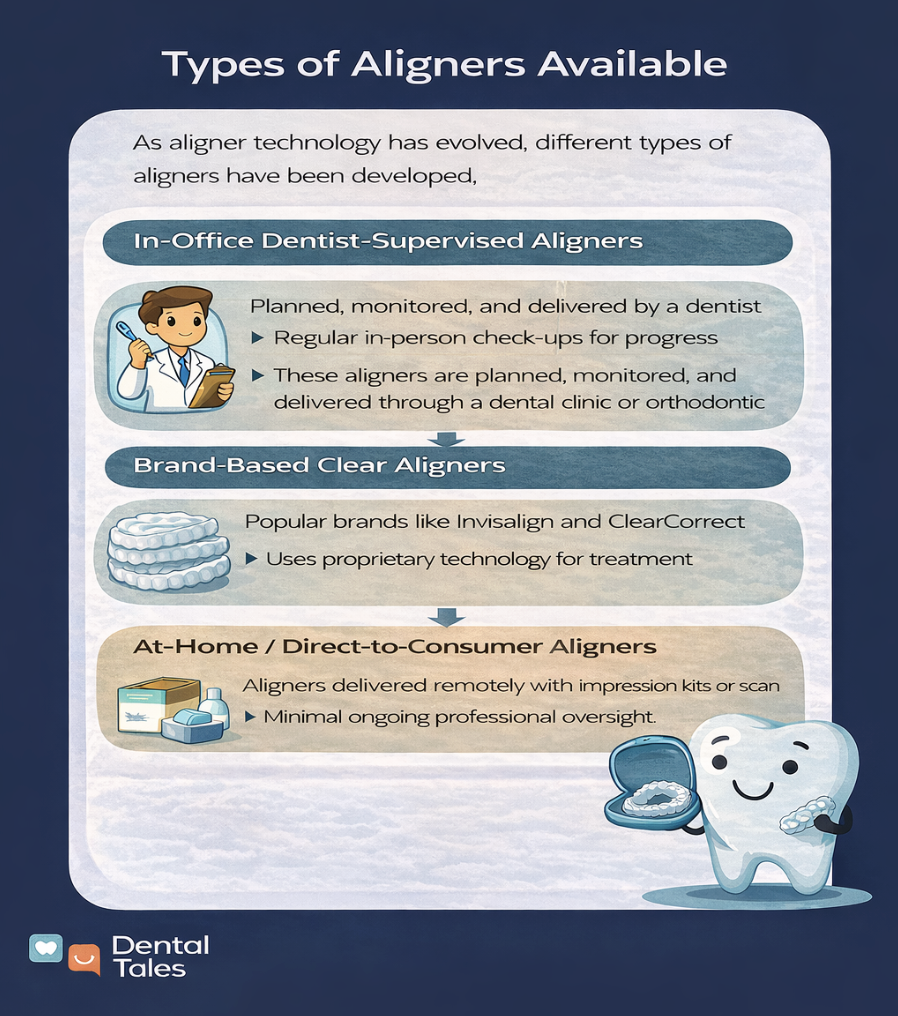
As aligner technology has evolved, various aligner systems have been developed, differing in design, customization, and treatment approaches.
1. In-Office Dentist-Supervised Aligners
These aligners are planned, monitored, and delivered through a dental clinic or orthodontic practice. Treatment is fully supervised, with regular in-person check-ups and the ability to make refinements based on clinical progress. This approach offers the highest level of professional oversight.
2. Brand-Based Clear Aligners
Several well-known aligner systems are available globally and in India. These brands use proprietary technology for treatment planning and aligner fabrication. While the core concept is similar, differences exist in customization capabilities, material quality, and the level of orthodontic involvement required.
3. At-Home / Direct-to-Consumer Aligners
Some companies offer aligners through a remote model, where patients receive impression kits or visit scanning locations, and aligners are shipped directly without ongoing in-person supervision.
While more affordable and convenient, these options carry clinical risks, particularly for cases that require professional monitoring. In India, regulatory oversight of direct-to-consumer aligners remains limited, underscoring the importance of professional evaluation before pursuing such options.
Aligners vs Braces: Key Differences
When comparing aligners to traditional braces, several factors come into play:
| Factor | Clear Aligners | Traditional Braces |
| Case Complexity | Best for mild to moderate alignment problems | Suitable for simple to complex orthodontic cases |
| Visibility | Nearly invisible when worn | Visible (metal or ceramic options) |
| Removability | Removable for eating and cleaning | Fixed to teeth throughout treatment |
| Oral Hygiene | Easier brushing and flossing | Requires extra cleaning effort |
| Compliance | Depends on consistent daily wear | Works continuously without patient effort |
| Treatment Control | Digitally planned; refinements may be needed | Greater control, especially in complex cases |
Read more details about braces in a separate guide that I’ve covered.
Cost of Aligners in India: What to Expect
The cost of aligner treatment in India varies significantly based on the patient’s case complexity, provider, and location. These figures are approximate and should be treated as general guidance rather than fixed pricing:
- Mild cases: ₹60,000 – ₹1,20,000
- Moderate cases: ₹1,00,000 – ₹2,00,000
- Complex cases requiring refinements: ₹1,50,000 – ₹3,00,000
Important: Actual costs depend on the number of aligners needed, treatment duration, and the level of professional involvement. An in-person evaluation is necessary for accurate pricing.
Factors That Influence Aligner Cost
There are several elements that determine the final cost of your aligner treatment. Here are the factors:
- Complexity of Tooth Movement
Simple spacing corrections require fewer aligners than cases involving crowding, rotations, or bite adjustments.
- Number of Aligner Trays Required
Treatment requiring 15 aligners will cost less than one requiring 40 or more sets.
- Treatment Duration
Longer treatments involve more monitoring visits and potentially additional refinements, increasing overall cost.
- Dentist or Orthodontist Involvement
Treatments supervised by experienced orthodontists or those involving complex planning may be priced higher due to expertise and clinical oversight.
- City and Clinic Infrastructure
Metropolitan areas typically have higher costs than smaller towns, reflecting differences in operational expenses and access to technology.
- Refinements and Mid-Treatment Changes
If teeth do not track as planned, additional aligners may be needed. Some providers include a certain number of refinements in the quoted cost, while others charge separately.
What Is Usually Included in the Cost?
Most aligner treatment packages include:
- Initial consultation and diagnosis
- Digital scans or impressions
- Full set of aligners for the planned treatment
- Periodic check-ups during active treatment
Possible Additional Costs:
- Refinement aligners if teeth do not track as expected
- Post-treatment retainers (sometimes included, sometimes separate)
- Extended treatment duration beyond the original plan
Insurance Coverage for Aligners in India
Dental insurance in India rarely covers orthodontic treatment, including aligners. Most policies categorize such procedures as elective or cosmetic, excluding them from coverage.
Some employer-provided health insurance plans may offer partial orthodontic benefits, but this remains uncommon. Patients are strongly advised to verify insurance eligibility and coverage limits before beginning treatment to avoid unexpected out-of-pocket costs.
How Long Does Aligner Treatment Take?
Treatment duration depends on the severity of misalignment and patient compliance:
- Mild cases: 6 to 12 months
- Moderate cases: 12 to 18 months
- Complex cases: 18 to 24 months or longer
Role of Patient Compliance
Wearing aligners for the recommended 20 to 22 hours daily is critical. Patients who frequently remove aligners or skip wearing them may experience extended treatment times or compromised results.
Factors That May Extend Treatment:
- Inconsistent aligner wear
- Teeth not tracking as planned, requiring refinements
- Biological factors such as bone density or age
- Poor oral hygiene leading to dental issues mid-treatment
Who Is a Good Candidate for Aligners?
Aligners work best for:
- Adults and older teenagers with fully erupted permanent teeth.
- Individuals with mild to moderate crowding, spacing, or bite irregularities.
- Patients who can commit to wearing aligners 20+ hours daily.
- Those seeking a discreet, removable orthodontic option.
Cases Where Aligners May Not Be Suitable
Aligners are less effective or inappropriate for:
- Severe bite problems, such as significant overbite, underbite, or open bite.
- Major jaw discrepancies require surgical intervention.
- Teeth needing substantial rotation or vertical movement.
- Patients with inconsistent wear habits or low compliance potential.
Benefits of Aligners
With advances in orthodontic technology, clear aligners offer a range of practical and lifestyle advantages that go beyond simply straightening teeth. It offers several advantages over traditional braces:
- Discreet Appearance
Clear aligners are virtually invisible, making them ideal for professionals, public-facing roles, and anyone concerned about aesthetics during treatment.
- Removable for Eating and Cleaning
Unlike braces, aligners can be taken out for meals and oral hygiene, eliminating dietary restrictions and simplifying brushing and flossing.
- Easier Oral Hygiene Maintenance
The ability to remove aligners means you can clean your teeth normally, reducing the risk of decay and gum disease during treatment.

- Fewer Emergency Visits
Aligners have no brackets or wires to break, meaning fewer urgent dental appointments for repairs.
- Improved Comfort
Smooth plastic trays typically cause less irritation to the cheeks and gums compared to metal brackets and wires.
Check out other dental treatments here.
Limitations & Risks of Aligners
Despite their benefits, aligners have important limitations:
- Dependence on Patient Compliance: Aligners only work if worn consistently. Treatment failure is most often linked to inadequate wear time.
- Not Ideal for All Orthodontic Cases: Complex bite problems, severe crowding, and certain tooth movements are better handled with fixed braces.
- Risk of Relapse if Retention is Ignored: Just like with braces, teeth can shift back after aligner treatment. Wearing retainers as prescribed is essential for long-term stability.
- Possibility of Refinements Extending Treatment: If teeth do not move as planned, additional aligners may be needed, lengthening the overall treatment time and potentially increasing cost.
Aligner Care & Maintenance
Proper care ensures aligners remain effective and hygienic:
- Cleaning Aligners Properly
Rinse aligners with lukewarm water and brush gently with a soft toothbrush. Avoid hot water, which can warp the plastic. Specialized cleaning solutions or mild soap can be used.
- Avoiding Staining and Damage
Remove aligners before consuming anything other than water. Coffee, tea, and colored beverages can stain the trays. Avoid exposing aligners to high heat.
- Storage Practices
When not wearing aligners, store them in their protective case to prevent loss or damage. Never wrap them in tissue, as they can easily be thrown away by mistake.
- Managing Aligner Discomfort
Mild soreness when switching to a new aligner set is normal and typically resolves within a day or two. Over-the-counter pain relief can help if needed.
After Aligners: Retainers & Long-Term Stability
Completing aligner treatment is not the end of orthodontic care. Teeth have a natural tendency to shift, and without proper retention, the results achieved through months of treatment can be compromised.
Why Retention is Critical After Aligners?
After aligners, the bone and tissues supporting teeth need time to stabilize in their new positions. Without retainers, teeth often drift back toward their original alignment, a process known as relapse.
Types of Retainers Used Post-Aligner Treatment
- Removable clear retainers: Similar in appearance to aligners, worn full-time initially and then reduced to nighttime use.
- Hawley retainers: Traditional wire-and-acrylic retainers, durable and adjustable.
- Fixed retainers: A thin wire bonded to the back of teeth, providing continuous retention without relying on patient compliance.
Duration of Retainer Wear
Retainers are typically worn full-time for the first few months after treatment, then reduced to nighttime wear. Many orthodontists recommend long-term or even lifelong nighttime retention to maintain alignment, particularly for patients with a history of crowding.
Preventing Orthodontic Relapse
Consistent retainer use, regular dental check-ups, and good oral hygiene all contribute to maintaining results. Habits like teeth grinding or nail-biting can also affect stability and should be addressed.
Aligners in India: Awareness, Access & Trends
The adoption of clear aligners in India has grown steadily, particularly in urban areas. Adults now make up a significant portion of aligner patients, driven by the treatment’s aesthetic appeal and professional image considerations.
- Rising Demand Among Adults
Many working professionals and older patients prefer aligners over braces due to their discreet appearance. This shift reflects changing attitudes toward adult orthodontic treatment.
- Urban vs Semi-Urban Access
Metropolitan cities have better access to orthodontic specialists and advanced aligner technology. In smaller towns and rural areas, availability remains limited, and awareness of aligners as a treatment option is still developing.
- Cost Perception vs Clinical Suitability
Some patients perceive aligners as a premium or luxury treatment. While aligners do often cost more than traditional metal braces, the decision should be based on clinical suitability, not just cost or aesthetics. Not every case is appropriate for aligners, regardless of budget.
- Need for Professional Supervision
The rise of direct-to-consumer aligner options has introduced convenience but also risk. Treatment without proper diagnosis, monitoring, or professional oversight can lead to poor outcomes, including bite problems or incomplete correction. Professional evaluation remains essential.
Conclusion
Clear aligners represent a significant advancement in orthodontic treatment, offering a discreet, comfortable, and effective option for many patients. However, they are not a one-size-fits-all solution. Success depends on careful case selection, professional planning, and patient commitment to wearing aligners as prescribed.
Understanding your specific orthodontic needs and being realistic about compliance expectations are critical to achieving good outcomes. If you are considering aligners, the first step is a thorough evaluation by a qualified dentist or orthodontist.
This will help you determine whether aligners are suitable for your case, what treatment will involve, and what costs to expect.
Orthodontic treatment is an investment in long-term oral health and function, not just aesthetics, and should be approached with informed decision-making and realistic expectations.
Frequently Asked Questions (FAQs)
Aligners typically cause mild pressure or discomfort when switching to a new set. This usually subsides within a day or two as your mouth adjusts.
Aligners should be worn 20 to 22 hours per day. They should only be removed for eating, drinking anything other than water, and oral hygiene.
Aligners can address minor bite irregularities, but severe bite problems often require traditional braces or other orthodontic interventions.
Treatment speed depends on case complexity, not the type of appliance. Mild cases may be completed in 6 to 12 months with aligners, but complex cases can take just as long as braces.
No. Aligners must be removed before eating or drinking anything other than water to prevent damage and staining.
Some people experience minor speech changes initially, such as a slight lisp. Most adapt within a few days as they get used to wearing the aligners.
Inconsistent wear can stall treatment progress, lead to poor results, or cause teeth to shift unpredictably. Compliance is critical for success.
Aligners can be used for teenagers, but compliance is essential. Younger patients who may struggle with consistent wear might be better suited to fixed braces.
Most aligner patients visit their dentist or orthodontist every 6 to 8 weeks to monitor progress and receive new sets of aligners.
Yes. Retainers are necessary after aligner treatment to prevent teeth from shifting back. Retention is a critical part of maintaining results.
Aligners work best for mild to moderate alignment issues. Complex cases involving severe crowding, significant bite problems, or major tooth rotations often require braces.
Both aligners and braces are safe when properly managed. Aligners may reduce the risk of gum irritation from brackets, but poor hygiene with either option can lead to dental problems.
Rinse aligners with lukewarm water and brush gently with a soft toothbrush. Avoid hot water and abrasive cleaners that can damage or warp the plastic.
Contact your dentist or orthodontist immediately. Depending on your treatment stage, you may be advised to move to the next aligner, revert to the previous one, or wait for a replacement.
The best way to determine if aligners are suitable is through a professional evaluation. Your dentist or orthodontist will assess your teeth, bite, and treatment goals to recommend the most appropriate option.