Pregnancy brings a whirlwind of questions about what’s safe and what’s not. I’ve seen countless expectant mothers walk into my clinic visibly nervous, hesitant to even sit in the dental chair. The fear is real: Will this X-ray harm my baby? Is the anesthesia safe? Should I just wait until after delivery?
However, dental care during pregnancy is safe and often recommended by medical professionals. Untreated dental problems during pregnancy can lead to serious complications, including infections that affect both mother and baby.
In this article, I’ll help you understand when dental visits are safe, which treatments are available, what should be delayed, and how to make informed decisions about your oral health while protecting your growing baby.
Key Takeaway: Can You Go to the Dentist When Pregnant?
Yes, you can and should go to the dentist during pregnancy. Routine dental care and necessary treatments are safe for both mother and baby when proper precautions are followed, and delaying care can actually increase pregnancy-related risks.
Is It Safe to Go to the Dentist While Pregnant?
The answer is a clear yes. Dental visits during pregnancy are not just safe, they’re essential. Here’s what many pregnant women don’t realize: untreated oral infections pose a greater risk to pregnancy than dental treatment itself.
An infected tooth or severe gum disease can allow bacteria to enter the bloodstream, potentially affecting the developing baby and increasing the risk of complications such as preterm birth and low birth weight.
I’ve treated pregnant patients throughout my career, and dentists receive specific training on how to safely care for expectant mothers. We understand which medications to use, which treatments to prioritize, and how to position you comfortably during procedures. The key is communication; always inform your dentist that you’re pregnant so appropriate precautions can be taken.
Why Oral Health Matters More During Pregnancy?
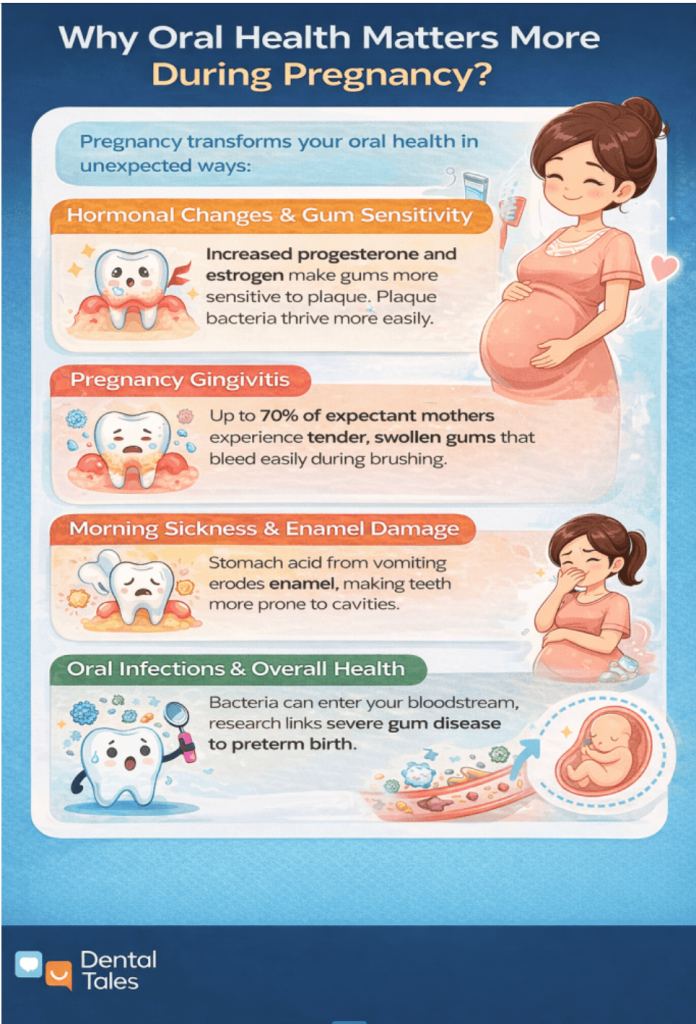
Pregnancy transforms your oral health in unexpected ways:
- Hormonal changes increase gum sensitivity. The surge in progesterone and estrogen makes your gums more reactive to plaque bacteria, creating a perfect environment for dental problems.
- Pregnancy gingivitis affects many expectant mothers. I see it constantly, swollen, tender gums that bleed easily during brushing. While it might seem minor, untreated gingivitis can progress to more serious gum infections.
- Morning sickness damages tooth enamel. Stomach acid from vomiting erodes enamel, making teeth vulnerable to cavities. Combined with dietary changes and frequent snacking, cavity risk increases significantly.
- Oral infections don’t stay isolated. Bacteria can enter your bloodstream and potentially affect your overall health and your baby’s development. Research shows associations between severe gum disease and preterm birth.
Trimester-by-Trimester Dental Care Guide
Pregnancy brings different oral health needs at each stage, and understanding what’s safe and necessary can help you protect both your dental health and your baby’s well-being.
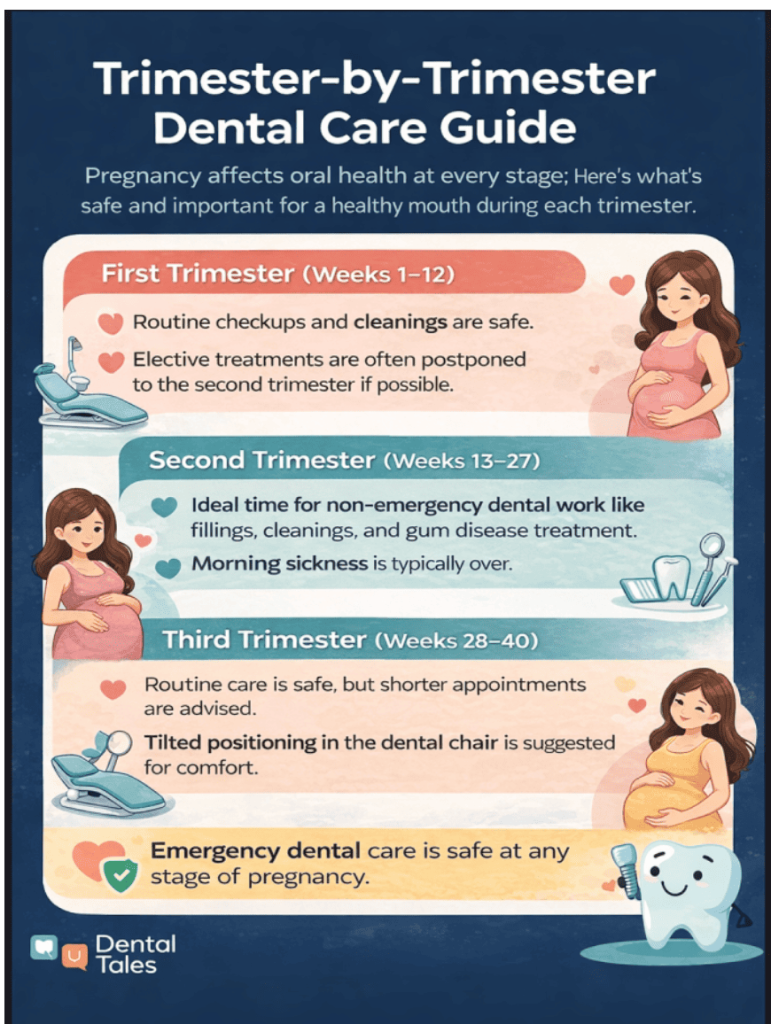
First Trimester (Weeks 1–12)
The first trimester is when your baby’s organs are forming, making this a sensitive developmental period. However, this doesn’t mean you should avoid the dentist entirely.
Emergency dental care should never be delayed, regardless of trimester. If you have a dental infection, severe pain, or trauma, treatment is necessary and safe. The stress and infection from untreated dental problems pose greater risks than the treatment itself.
Routine cleanings and checkups are safe during the first trimester. However, many dentists (myself included) often recommend scheduling elective procedures, those that aren’t urgent, for the second trimester when you’re typically feeling better and past the crucial organ development phase.
What I usually postpone: cosmetic procedures, extensive restorative work that isn’t urgent, and any treatment that can comfortably wait a few weeks without compromising your health.
Second Trimester (Weeks 13–27)
I always tell my pregnant patients that if they need dental work, the second trimester is the sweet spot. Morning sickness has typically subsided, you’re not yet dealing with the physical discomfort of late pregnancy, and the critical fetal development of the first trimester has passed.
This is the ideal window for addressing cavities, getting routine cleanings, treating gum disease, and handling most necessary dental procedures. You’ll likely feel more comfortable sitting in the dental chair, and the treatment won’t interfere with crucial developmental stages.
From a preventive standpoint, scheduling a cleaning during this period helps control pregnancy gingivitis before it worsens. I’ve seen how proactive care during the second trimester can prevent painful problems later in pregnancy.
Third Trimester (Weeks 28–40)
Dental treatment remains safe during the third trimester, but comfort becomes a bigger consideration. Lying flat on your back for extended periods can compress major blood vessels, potentially causing dizziness or decreased blood flow. I always position pregnant patients in late pregnancy slightly tilted to the left side to prevent this.
Routine care and necessary treatments can still be performed safely. However, if a procedure isn’t urgent and would require a lengthy appointment, I sometimes recommend waiting until after delivery simply for the patient’s comfort.
Emergency care, of course, should never wait. An infected tooth in your ninth month is just as dangerous as one in your fifth month and needs immediate treatment.
Dental Treatments That Are Safe During Pregnancy
Based on current guidelines and my clinical experience, these treatments are considered safe when necessary:
- Routine checkups and cleanings are not only safe but recommended. Regular cleanings help control pregnancy gingivitis and prevent more serious problems. I schedule these every six months for healthy patients, or more frequently if gum disease is present.
- Fillings and cavity treatment should be done when needed. Leaving cavities untreated allows them to grow deeper, potentially reaching the nerve and causing infection. The discomfort and infection risk far outweigh any concerns about the filling procedure itself.
- Root canal treatment becomes necessary when infection reaches the tooth’s nerve. Some patients worry about this procedure during pregnancy, but an untreated tooth infection can spread and become dangerous. Root canal treatment eliminates infection and is safe during pregnancy.
- Gum disease treatment is particularly important during pregnancy, given the increased susceptibility. Scaling and root planing (deep cleaning) can be performed safely to treat periodontitis and prevent complications.
- Emergency dental procedures, whether for trauma, severe infection, or unbearable pain, should always be treated immediately, regardless of pregnancy stage. The risks of delaying emergency care far exceed any treatment risks.
Are Dental X-Rays Safe During Pregnancy?
Yes, modern dental X-rays are considered safe during pregnancy when medically necessary. They use very low radiation, are focused on the mouth, and are taken with protective lead aprons and a thyroid collar.
Dentists recommend X-rays only when there’s a clear diagnostic need, such as infection or dental emergencies. Routine X-rays can usually wait until after delivery. Always inform your dentist if you’re pregnant so that proper precautions are taken.
Is Local Anesthesia Safe for Pregnant Women?
Yes, local anesthetics commonly used in dentistry, such as lidocaine with epinephrine, are considered safe during pregnancy. Untreated pain or infection can pose greater risks than the anesthesia itself.
Dentists avoid certain medications during pregnancy, which is why it’s essential to inform them beforehand. When treatment is necessary, the benefits of local anesthesia far outweigh the minimal risks.
Related reads:
Conclusion: Visiting a Dentist Is Safe During Pregnancy
Throughout my years in dental practice, I’ve witnessed the unnecessary anxiety pregnant women carry about dental care. I’ve also seen the relief on their faces when they learn that caring for their teeth during pregnancy is not only safe but an important part of caring for their baby.
Your pregnancy journey involves countless decisions about your health and your baby’s well-being.
When it comes to dental care, the decision should be simple: stay proactive, communicate openly with your dentist about your pregnancy, and address dental problems promptly. Your healthy smile supports your healthy pregnancy. You deserve both a healthy pregnancy and a healthy smile.
Frequently Asked Questions (FAQs)
Most dental treatments are safe during pregnancy when performed with proper precautions. Treating pain, infection, or dental emergencies is often safer than delaying care. Always inform your dentist that you’re pregnant so treatment can be planned appropriately.
Yes, some painkillers, such as paracetamol (acetaminophen), are considered safe during pregnancy when used as prescribed. Certain medications, including some anti-inflammatory drugs, should be avoided. Never self-medicate; always follow your dentist’s or doctor’s advice.
Yes. Routine dental checkups, cleanings, and necessary treatments are safe during pregnancy. The second trimester is generally the most comfortable time for non-urgent dental care, but emergency treatment can be done at any stage.
Elective procedures such as teeth whitening, cosmetic treatments, and non-urgent surgeries are usually postponed until after delivery. Routine X-rays are also often delayed unless there is a clear medical need.
Yes. Pregnant women are encouraged to maintain good oral health and seek dental care when needed. Prompt treatment of dental problems helps prevent infections that could affect both the mother and baby.