If you just had a root canal, you’re probably wondering when you can get back to your regular workout routine. I hear this question constantly in my practice, and I completely understand the importance of staying active, as nobody wants to pause their fitness goals longer than necessary.
But patients don’t know that the real issue isn’t the tooth, it’s the soft tissues surrounding it. After a root canal, your body is dealing with inflammation, healing gum tissue, and residual pressure in the jawbone.
Rushing back to intense exercise can interfere with this delicate healing process, which can lead to discomfort and even trigger painful flare-ups.
In this article, I’ll help you understand what’s actually safe, what carries risk, and why timing matters more than most people realize when it comes to working out after root canal treatment.
Key Takeaway
- You can work out after a root canal, but timing, intensity, and workout type matter more than people realize.
- Strenuous exercise too soon can worsen inflammation, increase pain, and trigger flare-ups, while a gradual, symptom-based return helps protect healing tissues.
How Exercise Interacts With Post–Root Canal Healing?
Exercise isn’t off-limits after a root canal, but the way your body heals in the first few days means not all movement has the same impact.
- Effect on Blood Pressure, Blood Flow, and Jaw Pressure
When you exercise, especially during high-intensity activities, your heart rate increases and blood rushes to all parts of your body, including your head and face. This surge in blood flow creates additional pressure in the treated area, which can intensify post-operative pain significantly.
I’ve had patients tell me they felt fine before their workout, only to experience throbbing pain halfway through a run or lifting session. That’s not coincidental, it’s your body responding to the increased vascular pressure in an already inflamed area.
- Inflammation and Delayed Recovery
Your body naturally triggers inflammation as part of the healing process after any dental procedure. This is healthy and necessary. However, intense exercise also causes its own inflammatory response as your muscles break down and rebuild.
When you stack exercise-induced inflammation on top of healing inflammation too early, you’re essentially asking your body to manage two competing recovery processes simultaneously. This can prolong soreness, delay tissue healing, and leave you feeling worse than if you’d simply rested.
- Jaw Clenching and Muscle Overload
Here’s something most people don’t realize: you probably clench your jaw during workouts without even knowing it. Whether you’re pushing through a heavy squat, sprinting uphill, or holding a plank, subconscious jaw tension is extremely common.
After a root canal, your jaw muscles and surrounding tissues are already tender. Adding this extra strain can lead to facial discomfort, tension headaches, and increased sensitivity around the treated tooth, all of which can make your recovery more uncomfortable than it needs to be.
Post-Operative Pain Patterns After Root Canal Treatment
Understanding normal pain patterns can help you make smarter decisions about when to resume exercise. In my experience, most patients follow a predictable timeline, though individual variation is common.
Pain typically doesn’t peak immediately after the procedure; it increases as the anesthesia wears off, usually within 3-6 hours. This initial discomfort can last anywhere from a few hours to a couple of days, depending on the complexity of your case.
Some patients experience what we call “flare-ups”, episodes of increased pain and swelling that can occur after 24-48 hours post-treatment, especially if there was an infection present. These flare-ups are precisely why I advise caution with physical activity during the first few days.
Root Canal Exercise Recovery Timeline
Rather than giving you a one-size-fits-all answer, I want to walk you through a more nuanced timeline that accounts for how your body actually heals.
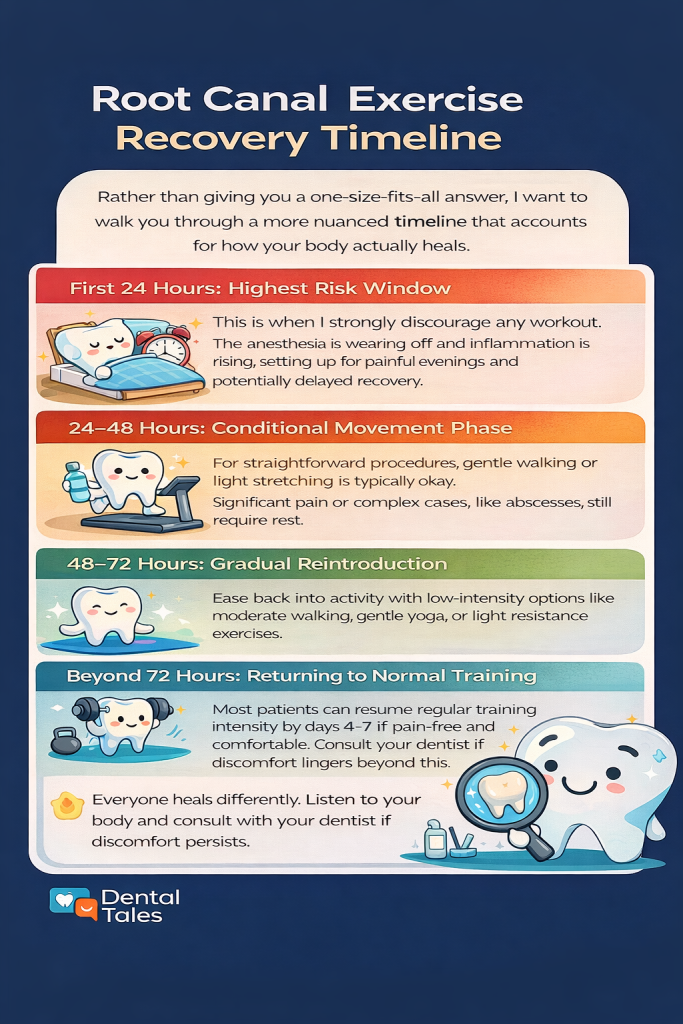
- First 24 Hours: Highest Risk Window
This is when I strongly discourage any workout. Your body is just beginning its healing response, inflammation is rising, and the anesthesia is wearing off. Same-day workouts might seem manageable if you’re still numb, but you’re setting yourself up for a painful evening and potentially delaying your overall recovery.
- 24–48 Hours: Conditional Movement Phase
Some patients, particularly those who had straightforward, infection-free procedures, can go with gentle walking or light stretching during this window.
However, if you’re experiencing significant pain, swelling, or have had a complex case (like treating an abscess), you should continue resting. Just because you can push through discomfort doesn’t mean you should.
- 48–72 Hours: Gradual Reintroduction
By day three, many of my patients are ready to ease back into activity. This means starting with low-intensity options, such as a moderate-paced walk, gentle yoga, or light resistance exercises with minimal jaw clenching.
Pay close attention to how you feel during and after these activities. If you notice increased throbbing, facial pressure, or pain that worsens post-workout, you’re moving too fast.
- Beyond 72 Hours: Returning to Normal Training
Most patients can safely return to their regular training intensity by days 4-7, provided they’re pain-free and can chew comfortably. Heavy lifting, intense cardio, and high-impact activities are typically fine once you’ve passed this threshold without lingering symptoms.
That said, everyone heals differently. If you’re still experiencing discomfort beyond a week, contact your dentist before resuming intense exercise.
Exercise Types: What’s Riskier Than It Looks
Not all workouts affect healing equally. Understanding which activities pose higher risks helps you make informed choices.
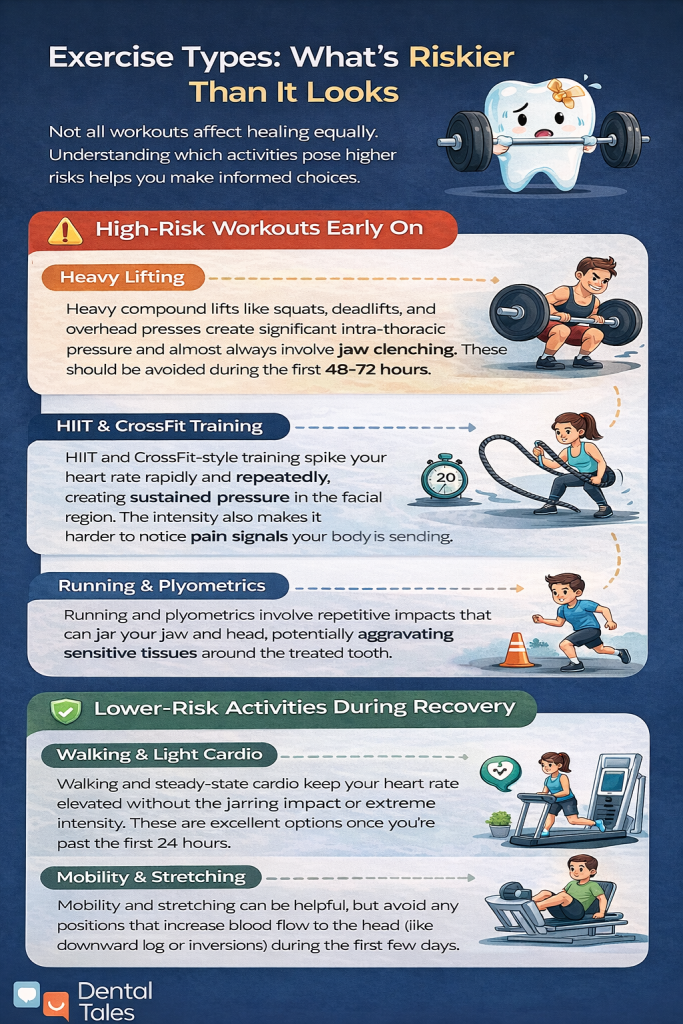
- High-Risk Workouts Early On
Heavy compound lifts like squats, deadlifts, and overhead presses create significant intra-thoracic pressure and almost always involve jaw clenching. These should be avoided during the first 48-72 hours.
HIIT and CrossFit-style training spike your heart rate rapidly and repeatedly, creating sustained pressure in the facial region. The intensity also makes it harder to notice pain signals your body is sending.
Running and plyometrics involve repetitive impacts that can jar your jaw and head, potentially aggravating sensitive tissues around the treated tooth.
- Lower-Risk Activities During Recovery
Walking and steady-state cardio keep your heart rate elevated without the jarring impact or extreme intensity. These are excellent options once you’re past the first 24 hours.
Mobility and stretching can be helpful, but avoid any positions that increase blood flow to the head (like downward dog or inversions) during the first few days.
Light resistance training using machines or lighter weights can work well in the later phases, as long as you remain conscious of jaw tension.
Individual Factors That Change Workout Timing After Root Canal
Not everyone recovers at the same pace after a root canal, and your ideal time to return to exercise depends on several personal and treatment-related factors.
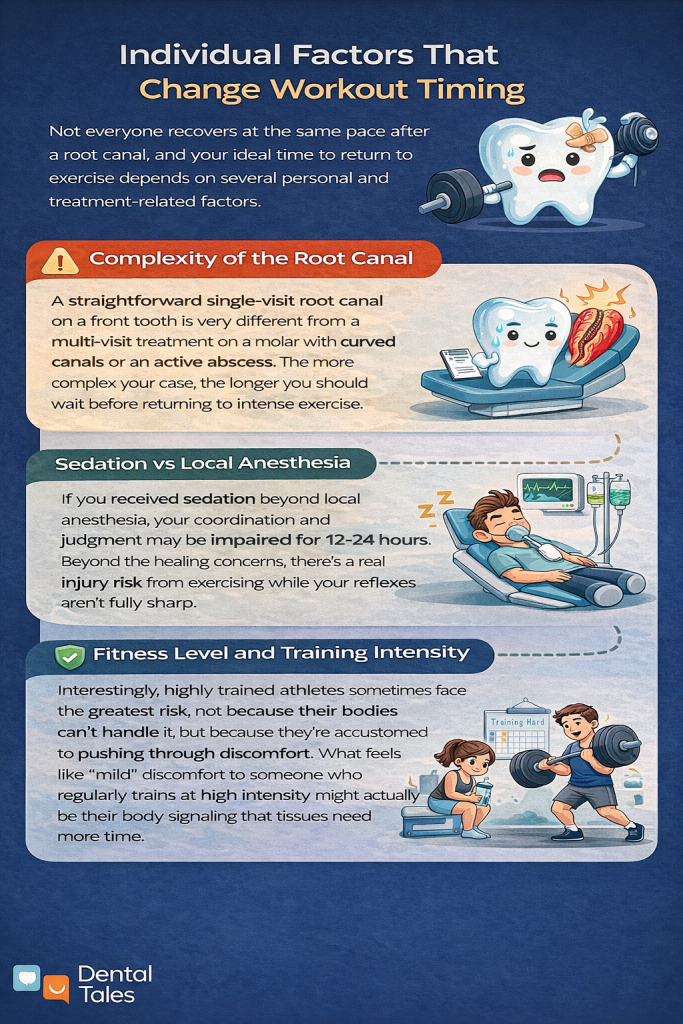
- Complexity of the Root Canal
A straightforward single-visit root canal on a front tooth is very different from a multi-visit treatment on a molar with curved canals or an active abscess. The more complex your case, the longer you should wait before returning to intense exercise.
- Sedation vs Local Anesthesia
If you received sedation beyond local anesthesia, your coordination and judgment may be impaired for 12-24 hours. Beyond the healing concerns, there’s a real injury risk from exercising while your reflexes aren’t fully sharp.
- Fitness Level and Training Intensity
Interestingly, highly trained athletes sometimes face the greatest risk, not because their bodies can’t handle it, but because they’re accustomed to pushing through discomfort. What feels like “mild” discomfort to someone who regularly trains at high intensity might actually be their body signaling that tissues need more time.
Conclusion
The bottom line is that exercise isn’t banned after a root canal; it’s temporarily modified. Pushing too hard, too soon, can result in prolonged discomfort, flare-ups, and a recovery process that stretches far longer than necessary.
Be patient with yourself. Prioritize symptom-based recovery over arbitrary timelines. And remember that protecting your healing tissues now means getting back to your full training capacity sooner and more comfortably, in the long run. Your body is remarkably good at healing when you give it the space to do so.
If you have specific concerns about your case or experience symptoms that worry you, don’t hesitate to reach out to your dentist. We’re here to support your recovery every step of the way.
Frequently Asked Questions
Avoid same-day workouts. Even if you feel fine due to lingering anesthesia, inflammation is building and exercise will likely increase pain and pressure in the treated area once numbness wears off.
Light cardio like walking can typically resume after 24-48 hours if you’re feeling comfortable. More intense cardio should wait until 72 hours or longer, depending on your symptoms and the complexity of your procedure.
Heavy weightlifting is generally riskier because it creates more jaw clenching and intrathoracic pressure. Light resistance training is comparable to moderate cardio, but heavy compound lifts should be postponed until you’re fully pain-free.
Yes. Increased blood flow and pressure from exercise can aggravate inflammation and trigger flare-ups, especially if there was an infection present or if you return to activity too soon.
Yes. Mild pain is your body’s signal that tissues need more recovery time. Exercising through pain can prolong healing and potentially worsen your symptoms. Wait until you’re completely pain-free before resuming your normal intensity.