
Most people don’t choose a bad dentist on purpose. They just choose the nearest one and pay for it later with pain, repeat procedures, and empty wallets. A good dentist listens to you, explains things clearly, and makes you feel at ease during your visits.
Whether you just moved to a new city, need to switch dentists, or are looking for one for the first time, knowing what to look for helps a lot.
This article will show you what matters while choosing a dentist. You’ll learn how to find someone who’s right for you and your family.
Key Takeaway
Choosing the right dentist directly affects your oral health, treatment outcomes, and overall comfort.
- A good dentist prevents problems, explains decisions clearly, and never rushes you into treatment you don’t understand.
- Key factors that you should evaluate include the dentist’s qualifications, experience, clinic hygiene, transparency in pricing, and patient reviews.
- Selecting a dentist carefully helps reduce dental anxiety and prevent long-term oral health problems.
Why Choosing the Right Dentist Matters?
According to the World Health Organization (WHO) oral health report in 2022, nearly 45% of the population suffers from oral diseases. That’s almost 3.5 billion people worldwide.
This isn’t because people don’t brush their teeth or don’t care about their oral health. It’s because dental care is often delayed, misunderstood, or poorly guided. That’s why choosing the right dentist matters.
Here are some reasons to choose the right dentist:
- Early problem detection saves you from bigger issues. Regular dental visits can catch problems like cavities, gum disease, and even oral cancer before they become serious. When you trust your dentist, you’re more likely to keep those appointments and stay healthy.
- The right dentist reduces dental anxiety. Many people feel nervous about dental visits. A dentist who understands this and takes time to make you comfortable can change the experience from something you dread into something manageable. You’ll feel more relaxed, ask questions, and take part in your own care.
- Good communication saves you time and money. A dentist who explains things well and doesn’t push unnecessary treatments helps you avoid procedures you don’t need. When treatment is required, you’ll understand why and what to expect.
Factors to Consider When Choosing a Dentist
Now that you understand why this decision matters, let’s look at the specific factors that will help you find the right dentist for your needs.
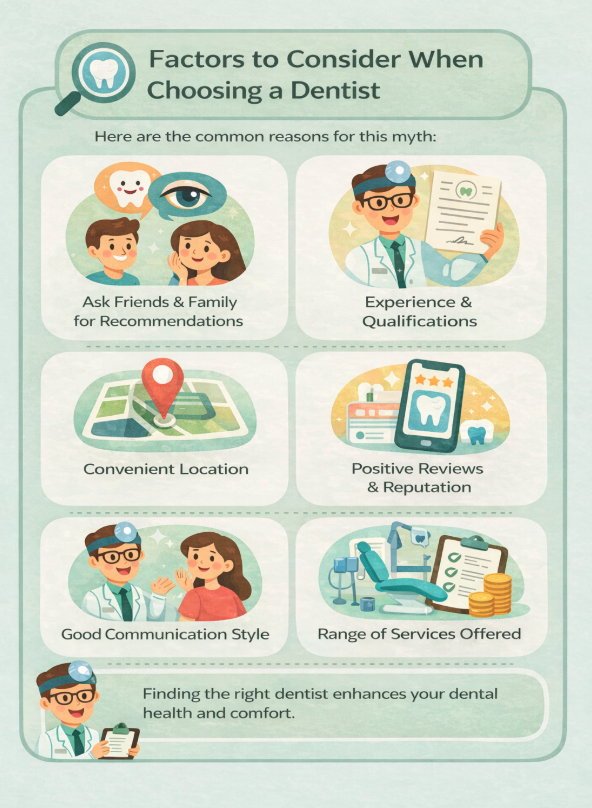
Ask Your Friends and Family for a Recommendation
Start with the people you trust. Friends, family members, or coworkers can share real experiences you won’t find online. They can tell you how the dentist treats patients, how easy it is to book appointments, and whether they felt heard and comfortable.
Personal recommendations help you narrow down your options quickly. If multiple people you trust recommend the same dentist, that’s a strong signal worth paying attention to.
Check the Dentist’s Experience and Qualifications
A dentist’s education and experience matter. Look into where they studied, their certifications, and how long they have been practicing. This information is often available on the clinic’s website or displayed in the office.
Experience becomes especially important if you need complex treatment. A dentist who has performed hundreds of root canals or many dental implants will have better outcomes than someone just starting out with these procedures.
Consider the Clinic Location
Location might seem like a minor detail, but it affects whether you’ll actually keep your appointments. A clinic near your home or workplace makes it easier to schedule regular checkups and handle unexpected issues without disrupting your entire day.
If the clinic is out of your way, you might find reasons to postpone visits. Choosing a nearby location helps you stay consistent with your dental care.
Reviews and Reputation
Online reviews on platforms like Google, Healthgrades, or local directories provide a window into other patients’ experiences. Pay attention to repeating comments rather than one-off complaints. If multiple reviews mention long wait times, poor communication, or billing surprises, take note.
That said, remember that reviews represent individual experiences. Look for patterns and balance negative feedback with positive comments to get a fuller picture.
Communication Style of the Dentist
The best dentist for you is one who listens. During your first visit or consultation, notice whether the dentist takes time to hear your concerns, explains procedures in terms you understand, and encourages you to ask questions without rushing.
Good communication builds trust. You should never feel rushed, dismissed, or talked down to. A dentist who values clear, patient-centered communication makes every aspect of your care better.
Range of Treatments and Services Offered
Some dental clinics focus on basic preventive care, while others offer a full range of services, including cosmetic procedures, orthodontics, or oral surgery. Consider what you might need now and in the future.
Having access to multiple services under one roof saves time and helps maintain continuity of care. If your dentist knows your complete dental history, they can coordinate treatments more effectively.
Hygiene Standards and Clinic Comfort
The moment you walk into a dental office, you can assess its cleanliness. Equipment should be sterilized properly, surfaces should be clean, and staff should follow proper hygiene protocols. These aren’t luxuries; they’re basic safety requirements.
Beyond cleanliness, also pay attention to how the clinic feels overall. Is the waiting area comfortable? Does the staff seem organized and respectful? These factors affect your stress level and willingness to return.
Pricing and Insurance Handling
Dental care is an investment, and you deserve to know what you’re paying for. The office should provide clear information about costs before any procedure. Transparency in pricing prevents unpleasant surprises later.
If you have dental insurance, confirm that the office accepts your plan and ask how they handle claims. A good practice will explain what your insurance covers and what you’ll owe out of pocket.
Some Additional Tips for Choosing a Dentist
Before you commit, it helps to pay attention to what you see and how you’re treated.
- Visit the Clinic Before Committing
If possible, schedule a brief consultation or request an office tour before starting treatment.
This allows you to assess the clinic’s cleanliness, organization, and overall atmosphere. A well-maintained, calm environment often reflects how seriously a practice takes patient care.
- Observe the Front Desk and Staff
Pay attention to how the front desk manages phone calls, appointments, and patient questions.
Are they polite, attentive, and organized? Efficient administrative staff usually indicate smoother scheduling, clearer billing, and fewer communication issues later.
- Trust Your First Impression
Your comfort matters. If something feels off during your initial visit, such as rushed explanations, poor hygiene standards, or dismissive behavior, it’s okay to look elsewhere.
Choosing a dentist you feel confident and comfortable with is essential for long-term dental care.
Conclusion
Choosing the right dentist is a personal decision that deserves careful thought. The factors outlined above will contribute to the quality of care you’ll receive and how you’ll feel about getting that care.
So, take your time with this decision. When you find the right fit, you’re not just choosing a healthcare provider, you’re investing in your long-term wellbeing.
Remember, the right dentist will answer your queries properly, so do not hesitate to ask as many questions as you have about your oral health.
Frequently Asked Questions (FAQs)
Ask about their experience with your specific concerns. Find out their approach to preventing problems. Ask how they handle emergencies and what their hours are. Also, ask about payment plans and how they explain treatment options.
Look up your state’s dental board website. They keep records of all licensed dentists and will show if anyone has had complaints against them.
Watch out for a dirty or messy office, staff who can’t answer basic questions, a dentist who pushes expensive treatments without explaining other options, or an office that makes it hard to get your dental records.
Ask each office for a list of what they charge for common procedures like cleanings, fillings, and X-rays. Ask how they work with insurance and what you’ll typically pay out of pocket. Many offices will check your insurance benefits for free before your first visit.