One of the biggest fears before starting any orthodontic treatment is pain. And if you’re considering getting braces, you might also have this question: “Will this hurt?”
I completely understand this concern. Let me start with some honest reassurance: braces can cause temporary discomfort, not constant pain. Most soreness happens during the first few days after placement or adjustments.
Modern orthodontic techniques, lighter wires, improved bracket designs, and advanced aligner systems have made treatment far more comfortable than it was decades ago. Understanding what to expect reduces anxiety and makes the process easier.
Key Takeaway
- Braces typically cause mild to moderate soreness, especially during the first few days after placement or adjustment appointments.
- Discomfort usually peaks within 24 to 72 hours and then gradually improves.
- Over-the-counter pain relief, orthodontic wax, and soft foods help manage symptoms effectively.
- As the mouth adapts, pain decreases significantly, and most patients function normally within a week.
Why Braces Cause Discomfort?
Braces work by applying controlled pressure to teeth over time. That pressure triggers a biological process inside the bone.
When force is applied:
- Bone breaks down on one side of the tooth
- New bone forms on the opposite side
- The tooth gradually shifts position
The process is called remodeling. During the early phase of movement, the surrounding tissue responds with mild inflammation. That inflammation creates pressure and tenderness, especially when chewing. The discomfort does not mean damage. It is a sign that the teeth are responding to controlled orthodontic forces.
Braces Pain Timeline: What to Expect at Each Stage?
Understanding the typical timeline helps reduce unnecessary worry.
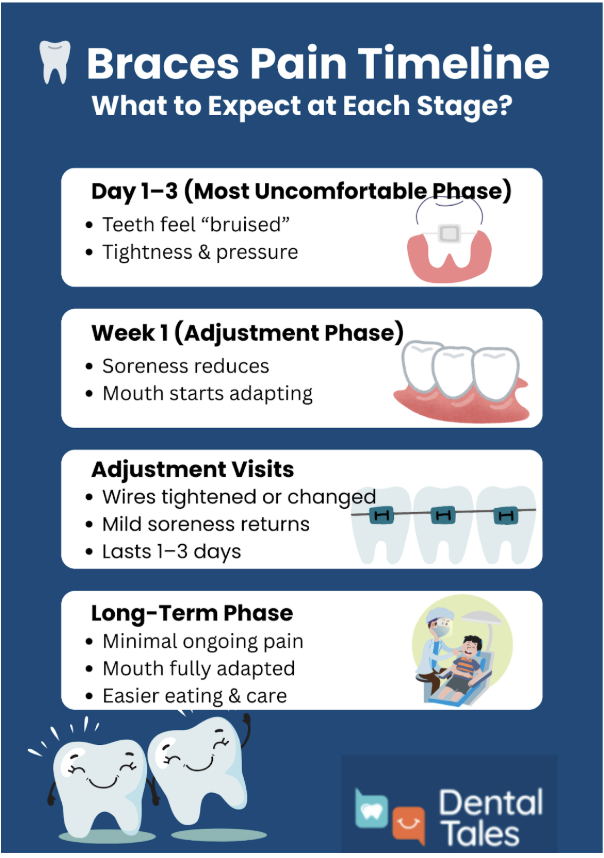
Day 1-3 After Getting Braces
The first few days are usually the most uncomfortable. You’ll feel pressure and tightness across your teeth, almost like someone is gently but firmly pushing on them.
Chewing becomes sensitive, and you might find yourself avoiding certain foods instinctively. Some of my patients describe it as feeling like their teeth are “bruised.”
Your lips, cheeks, and tongue might also feel irritated as they adjust to having brackets in your mouth. This is temporary, but it can feel strange at first.
Week 1
By the end of the first week, you’ll notice the soreness gradually reducing. Your mouth starts adapting to the braces, and the initial inflammation settles down.
You might still experience minor irritation from the brackets rubbing against the inside of your mouth, but this becomes less bothersome each day.
Adjustment Appointments
Every four to six weeks, you’ll visit your orthodontist for adjustments. During these appointments, wires are tightened or changed to continue moving your teeth.
After each adjustment, you’ll experience temporary soreness again, similar to what you felt initially, but usually milder. This typically lasts one to three days.
Long-Term Wear
After the first few months, most patients experience minimal ongoing discomfort.
Your mouth has adapted, and you’ve learned how to eat and care for your braces comfortably. Occasional tenderness after adjustments continues, but it becomes much more manageable.
Types of Braces and Pain Differences
Different systems may feel slightly different, though overall discomfort levels are comparable.
- Traditional Metal Braces
Traditional braces are the most common option that people go for. They’re durable and effective, though the brackets can initially cause more irritation to your cheeks and lips.
- Ceramic Braces
They function similarly to metal braces but use tooth-colored brackets. The pain level is comparable, though some patients find them slightly more comfortable because the ceramic material is smoother.
- Lingual Braces
Lingual braces are attached to the back of your teeth. They may cause more tongue irritation during the early phase, though pressure discomfort is similar.
- Clear Aligners
Clear aligners apply force through removable trays. Patients often describe the sensation as pressure rather than pain. Soreness occurs when switching to a new aligner set.
Studies comparing aligners and traditional braces suggest aligners may produce slightly less soft tissue irritation, though tooth movement soreness is comparable.
How to Manage Braces Pain Effectively?
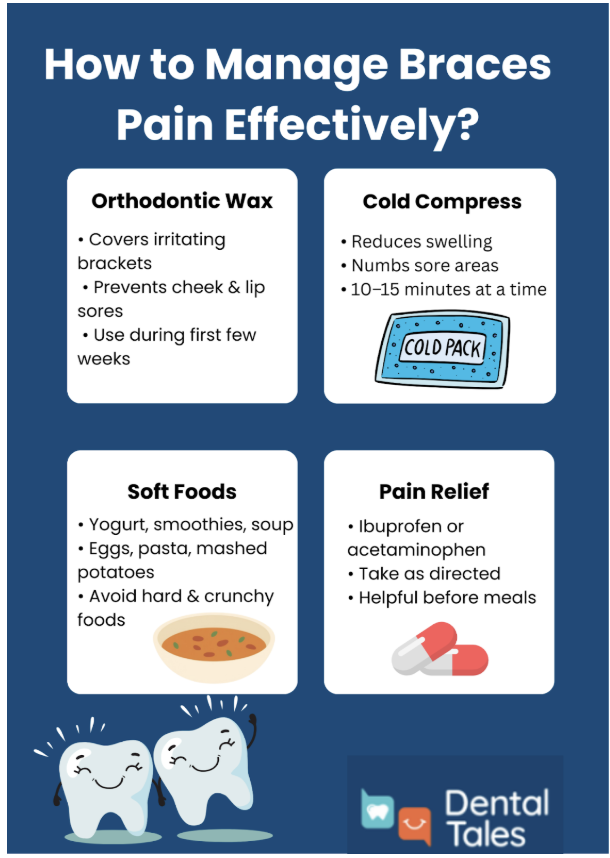
From my experience, these strategies work best for managing discomfort:
- Orthodontic Wax
Orthodontic wax is your best friend during the first few weeks. Apply small amounts over brackets that irritate your cheeks or lips. This creates a smooth barrier and prevents painful sores.
- Cold Compress
A cold compress applied to the outside of your mouth reduces
swelling and numbs the area. Use it for 10-15 minutes at a time during the first few days.
- Soft Food
Soft food recommendations include yogurt, smoothies, mashed potatoes, soup, scrambled eggs, and pasta. Avoid hard, crunchy, or chewy foods when your teeth feel sore.
- Over-the-Counter Pain Relief
Over-the-counter pain relievers like ibuprofen or acetaminophen help manage discomfort. Take them as directed on the package, ideally about an hour before meals during the first few days.
- Warm Saltwater Rinse
Saltwater rinses soothe irritated gums and promote healing. Mix half a teaspoon of salt in warm water and swish gently around your mouth two to three times daily.
Also check out: Ceramic braces cost
Do Braces Hurt More for Adults or Teens?
This is a common question I hear from adult patients. Adult bone tissue is denser than adolescent bone, which can mean slightly slower tooth movement. However, this doesn’t necessarily translate to more pain.
The main difference I’ve observed is in adaptation timelines. Teenagers often adjust faster because their bodies are still growing and changing. Adults might need a bit more time to get comfortable, but with proper pain management, the experience is quite similar.
Compliance actually matters more than age. Patients who follow their orthodontist’s instructions, whether teenagers or adults, generally have smoother, less painful experiences.
Related reads about braces:
Conclusion
Brace discomfort is temporary and manageable. Soreness is most noticeable during the first few days after placement or adjustments, then steadily decreases as the mouth adapts.
Modern orthodontic systems are designed to apply controlled, biologically safe forces. With proper care, soft foods, and simple pain management strategies, most patients adjust quickly.
The short-term discomfort leads to long-term benefits. improved bite function, better oral hygiene, enhanced facial balance, and lasting confidence. For most patients, the outcome far outweighs the temporary soreness experienced at the beginning.
FAQs
- Do braces hurt the whole time?
No, absolutely not. The discomfort is temporary and occurs mainly during the first week and for a few days after each adjustment. Between adjustments, most patients experience little to no pain.
- Is getting braces put on painful?
The placement process itself isn’t painful. You’ll feel pressure and some discomfort as brackets are bonded and wires are placed, but it’s not sharp pain. The soreness typically begins a few hours after the appointment.
- Are adjustments worse than initial placement?
Most patients find adjustments less uncomfortable than the initial placement. Your mouth has already adapted to having braces, and you know what to expect.
- Can braces cause headaches?
Some patients experience mild headaches during the first few days as their teeth adjust to the pressure. These usually resolve quickly. If headaches persist, mention this to your orthodontist.
- How long does pain last after tightening?
Soreness after adjustment appointments typically lasts one to three days. By the fourth day, most patients feel back to normal.