Toothache has a way of taking over everything, your sleep, your focus, even your mood. It might start as a small twinge when you drink something cold, or it could be a constant pain that keeps you up at night. Some toothaches are mild and manageable, while others can be so severe that they affect everything from eating to sleeping.
While certain remedies can provide temporary relief at home, it’s important to understand that most toothaches require professional dental care. Ignoring tooth pain can lead to more serious complications, including infections that spread beyond your mouth.
This guide explains what might be causing your toothache and when it’s time to schedule a dental appointment.
Key Takeaway: Causes of a Toothache
A toothache is a symptom, not a condition, and it usually signals an underlying dental problem that needs attention.
- Most toothaches are caused by cavities, infections, gum disease, cracked teeth, or pressure from sinus or wisdom tooth issues.
- Pain may start mild or intermittent, but often worsens as the underlying problem progresses.
- Home remedies can temporarily ease discomfort, but do not treat the cause of tooth pain.
- Persistent pain, swelling, fever, or pain while chewing are signs that require prompt dental evaluation.
- Early diagnosis and treatment prevent infection, tooth damage, and the need for more invasive procedures.
What Are the Most Common Causes of Toothache?
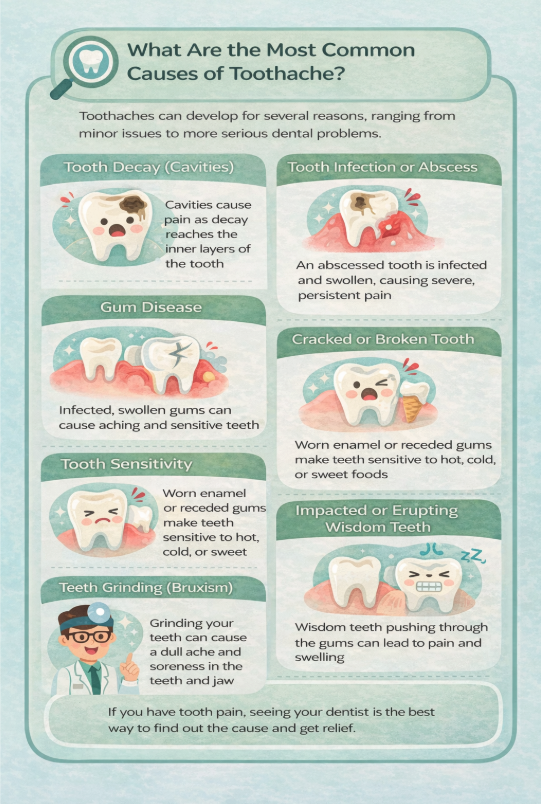
Toothaches can develop for several reasons, ranging from minor issues to more serious dental problems.
1. Tooth Decay (Cavities)
Cavities are still one of the leading causes of toothaches. When bacteria in your mouth feed on sugars and starches, they produce acids that gradually wear away your tooth enamel. At first, you might not notice any symptoms, but as the decay moves deeper into the tooth’s layers, pain develops.
The discomfort typically starts as mild sensitivity, which can turn into a sharp pain or discomfort once the cavity reaches the dentin and eventually the pulp, where the tooth’s nerves are located. If cavities are left untreated, the pain can become constant and severe.
2. Tooth Infection or Abscess
When bacteria reach the inner part of a tooth, they can cause an infection that leads to an abscess (a pocket of pus that forms at the root of the tooth or in the surrounding gum tissue). This condition produces intense pain that doesn’t go away on its own.
Abscessed teeth often come with additional warning signs, including swelling in your face or gums, sensitivity to pressure, and sometimes fever. This is a serious condition that requires immediate dental attention to prevent the infection from spreading.
3. Gum Disease
Periodontal disease, commonly known as gum disease, occurs when inflammation or infection affects the tissues supporting your teeth. In its early stage (gingivitis), you might notice bleeding gums and mild discomfort. As it progresses to periodontitis, the pain becomes more pronounced.
People with gum disease often experience swollen, tender gums that bleed easily while brushing or flossing. Teeth may feel loose or sensitive, and the gums may start to pull away from the teeth, exposing more of the tooth surface.
4. Cracked or Broken Tooth
Teeth can crack or break for many reasons, such as biting down on something hard, experiencing trauma to the mouth, or even from weakened enamel. Some cracks are so small they’re invisible to the naked eye, yet they can cause significant pain.
A common sign of a cracked tooth is pain that occurs when you bite down or release pressure while chewing. This pain may come and go, which can make it harder to pinpoint the exact tooth causing the problem.
5. Tooth Sensitivity
Sensitive teeth develop when the protective enamel wears thin or when gum recession exposes the tooth roots. The underlying dentin contains tiny tubules that connect to the tooth’s nerve center, making the tooth vulnerable to external stimuli.
People with sensitive teeth experience sharp, sudden pain when consuming hot beverages, cold ice cream, or sweet treats. The pain is usually brief but can be quite intense.
6. Impacted or Erupting Wisdom Teeth
Wisdom teeth, also called third molars, typically emerge in late adolescence or early adulthood. When there isn’t enough room in the jaw for these teeth to come in properly, they become impacted, causing pressure and inflammation.
The pain from wisdom teeth can be felt in the back of the mouth and may radiate to your ear or the side of your head. The surrounding gum tissue often becomes swollen and tender.
7. Teeth Grinding (Bruxism)
Many people grind or clench their teeth, especially during sleep, without realizing it. This habit, known as bruxism, places excessive force on your teeth and jaw muscles over time.
The resulting pain is often a dull, persistent ache in your teeth and jaw. You might also wake up with headaches or notice that your jaw feels tight and sore.
8. Sinus Infection
It might surprise you to learn that sinus problems can cause tooth pain. The roots of your upper back teeth sit very close to your sinus cavities. When your sinuses become inflamed and filled with fluid due to infection, they can press on these tooth roots.
Sinus-related tooth pain typically affects multiple upper teeth on one or both sides. The pain often worsens when you bend forward or lie down.
Do you know: The type of toothbrush you use can affect your overall teeth? Get all the details within my article!
How Do I Get My Toothache to Stop?
While you’re waiting to see a dentist, there are a few ways to manage tooth pain at home. These steps can help reduce discomfort for a short time, but they don’t treat the root cause of the toothache.
- Avoid chewing on the painful side of your mouth. Putting pressure on an already irritated tooth can make the pain worse, especially if the nerve is inflamed. Using the opposite side while eating helps reduce strain and can make daily activities more comfortable.
- Rinse with warm salt water to calm the area. A saltwater rinse can help reduce inflammation and wash away food particles around the sore tooth. Mix half a teaspoon of salt in a glass of warm water, gently swish for about 30 seconds, and spit it out. This can be done a few times a day.
- Apply a cold compress to the outside of your cheek if there is swelling or throbbing pain. Cold helps numb the area and reduce inflammation. Apply it for 15 to 20 minutes at a time, always wrapping the ice pack in a cloth to protect your skin.
- Take over-the-counter pain relievers if needed, but use them carefully. Pain medication can help manage discomfort, but it’s important to choose the right option and follow dosing instructions. When in doubt, ask your dentist which medication is safest for you.
- Adjust what you eat and drink to avoid triggering pain. Very hot, cold, or sugary foods and drinks can worsen toothache symptoms. Choosing softer, mild-temperature foods can help keep pain under control until your appointment.
Note: These home remedies can make a toothache easier to live with, but they don’t fix the problem. The only way to fully stop tooth pain is to treat the underlying cause with professional dental care.
When to See the Dentist
Some toothaches need professional care sooner rather than later. These signs tell you it’s time to book an appointment instead of waiting it out.
- Pain That Lasts More Than One or Two Days
If tooth pain continues for more than a day or two, even if it feels mild, it usually means there’s an underlying problem. Ongoing pain rarely goes away on its own and often worsens without treatment.
- Severe Pain That Disrupts Daily Life
Tooth pain that interferes with eating, working, or sleeping should be checked promptly. If the pain keeps you awake at night or gets worse despite home care, it’s a clear sign not to delay.
- Swelling in the Mouth or Face
Swelling in the gums, jaw, or face is a sign of a more serious issue. Facial swelling can indicate an infection that may spread if left untreated and needs immediate dental attention.
- Fever or Signs of Infection
A fever along with tooth pain often points to an infection. The presence of pus or discharge around a tooth is another warning sign that requires urgent dental care.
- Pain When Biting or Chewing
Pain that occurs specifically when you bite down or chew may indicate a cavity, crack, or dental abscess. These problems typically need professional treatment to prevent further damage.
- Visible Tooth Damage or Injury
If you’ve chipped, cracked, or injured a tooth, schedule a dental visit as soon as possible. Even if there’s no pain at first, damaged teeth can lead to infections or structural issues later.
Tip: Check my detailed guide on how to choose a dentist before you visit one!
Dental Treatments for Toothache
The right treatment for a toothache depends on what’s causing the pain. After examining your tooth, your dentist might recommend the following options:
- Fillings for Cavities
If a cavity is causing your toothache, a filling is usually the solution. Your dentist removes the decayed part of the tooth and fills the space with a strong, durable material.
This restores the tooth’s shape and function and stops the decay from spreading.
- Root Canal Treatment for Infected Teeth
When decay or infection reaches the inner pulp of the tooth, a root canal is needed. During this procedure, the infected tissue is removed, the inside of the tooth is cleaned, and the space is sealed to prevent future infection.
Despite common fears, modern root canal treatments are typically no more uncomfortable than getting a filling.
- Treatment for Gum Disease
Gum-related toothaches are treated based on how advanced the condition is. In the early stages, professional cleaning and better daily oral care may be enough.
More advanced gum disease may require deep cleaning procedures, such as scaling and root planing, or in some cases, surgical treatment.
- Crowns for Cracked or Weakened Teeth
If a tooth is cracked, worn down, or structurally weak, a crown may be recommended. A crown is a custom-made cap that fits over the tooth, protecting it from further damage while restoring strength and normal function.
- Tooth Extraction for Severe Damage
When a tooth is too damaged or infected to be saved, removal may be the best option. After extraction, your dentist will discuss replacement options such as bridges or dental implants to restore your smile and maintain proper oral health.
Conclusion
Toothaches should never be taken lightly. Understanding the common causes and recognizing the warning signs helps you make informed decisions about when to seek professional care.
The main cause of your toothache needs to be diagnosed and addressed by a qualified dentist. Delaying treatment can lead to more complex dental problems, increased discomfort, and higher treatment costs down the line. Protecting your oral health today prevents more serious complications tomorrow.
Frequently Asked Questions (FAQs)
- How do I know if a toothache is an infection?
Look for severe, throbbing pain that won’t respond to pain medication, swelling in your gums or face, fever, bad breath, and sensitivity when biting. If you have these symptoms, contact your dentist immediately; infections can spread.
- Could sinusitis be causing my toothache?
Yes, especially if your upper back teeth hurt. Sinus infections create pressure that affects tooth roots.
The pain usually hits multiple teeth and gets worse when you bend forward. If you also have nasal congestion or recently had a cold, your sinuses might be the culprit.
- What are the signs that a cracked tooth is the source of pain?
Sharp pain when you bite down that stops when you release pressure is the main sign.
The pain comes and goes depending on how you use the tooth. You might also feel sensitivity to temperature changes. Some cracks are too small to see, so a dentist needs to diagnose them properly.