You brush your teeth, you floss (sometimes), yet that stubborn yellow film keeps building up, your gums feel tender, and your next dental visit is filled with guilt and cost. That yellow film turns into plaque, and once that plaque hardens, only a dentist can remove it. Most plaque is completely preventable and removable at home if you act early.
But here’s what I need you to understand before we go further: removing plaque at home is not the same as replacing your dentist. There’s a clear line between what you can safely do in your bathroom and what requires professional intervention.
In this article, I’ll help you understand exactly where the line is, what works, what doesn’t, and most importantly, what could harm your teeth if done incorrectly.
Key Takeaway: How to Remove Plaque From Teeth Without Dentist?
- The plaque is soft and removable at home if you address it early. It’s that sticky film you feel on your teeth when you wake up or after a meal.
- But once plaque hardens into tartar (calculus), no amount of brushing, scraping, or home remedies will remove it safely. Attempting to do so can damage your enamel and gums.
- The entire goal of at-home plaque care is daily disruption and prevention, not scraping off hardened deposits with DIY tools you found online.
What Is a Dental Plaque?
Think of plaque like fresh mud on your shoes, wipe it off immediately, and it’s gone. Wait too long, and it hardens into something you can’t simply brush away. That’s the difference between plaque and tartar.
It’s a soft, sticky bacterial film that forms on your teeth every single day. It doesn’t matter how well you brushed this morning; plaque will start forming again within hours.
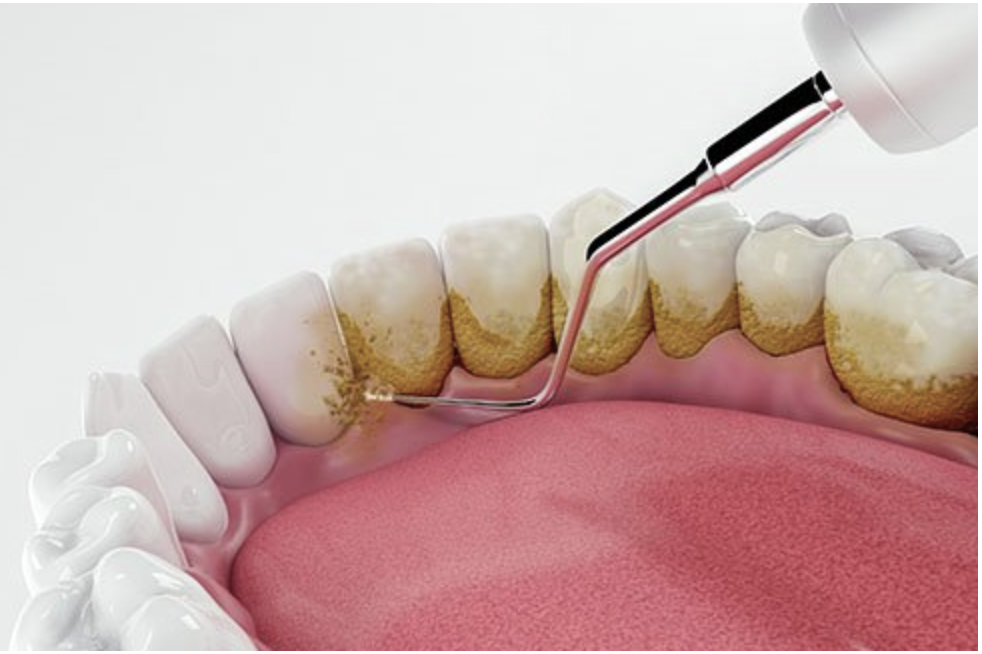
Every time you eat or drink, food particles mix with your saliva and the bacteria naturally present in your mouth. These bacteria feed on sugars and starches, producing acids as a byproduct. This results in a colorless, tacky layer that clings to your teeth, gums, and tongue.
This may seem harmless, but if left undisturbed, it can lead to gum inflammation (gingivitis), tooth decay, and eventually periodontal disease. I’ve seen patients lose their healthy teeth simply because they underestimated plaque.
Plaque vs Tartar: What You Can and Can’t Remove at Home
This is where many people get confused, and frankly, where most DIY methods fail.
Plaque is soft. You can remove it with proper daily brushing and flossing. If you run your tongue across your teeth and feel a slightly fuzzy or slippery layer, that’s plaque. It’s removable.
Tartar (also called calculus) is hardened plaque. It forms when plaque sits on your teeth for too long, usually because of missed brushing or poor technique. Tartar is rock-hard, often yellowish or brown, and bonds tightly to your enamel. You cannot remove it with a toothbrush, floss, or any home remedy.
Attempting to scrape tartar off at home is dangerous. I’ve treated patients who used metal tools, toothpicks, or even needles to chip away at tartar, only to end up with damaged enamel, gum injuries, and infections. Professional scaling tools are designed to remove tartar without harming your teeth; home substitutes are not.
If you see hardened deposits on your teeth, book a dental appointment. That’s the only safe solution.
What You Can Do at Home: Dentist-Approved Plaque Removal Methods
Now let’s talk about some dentist-approved methods that you can use at home to remove plaque.
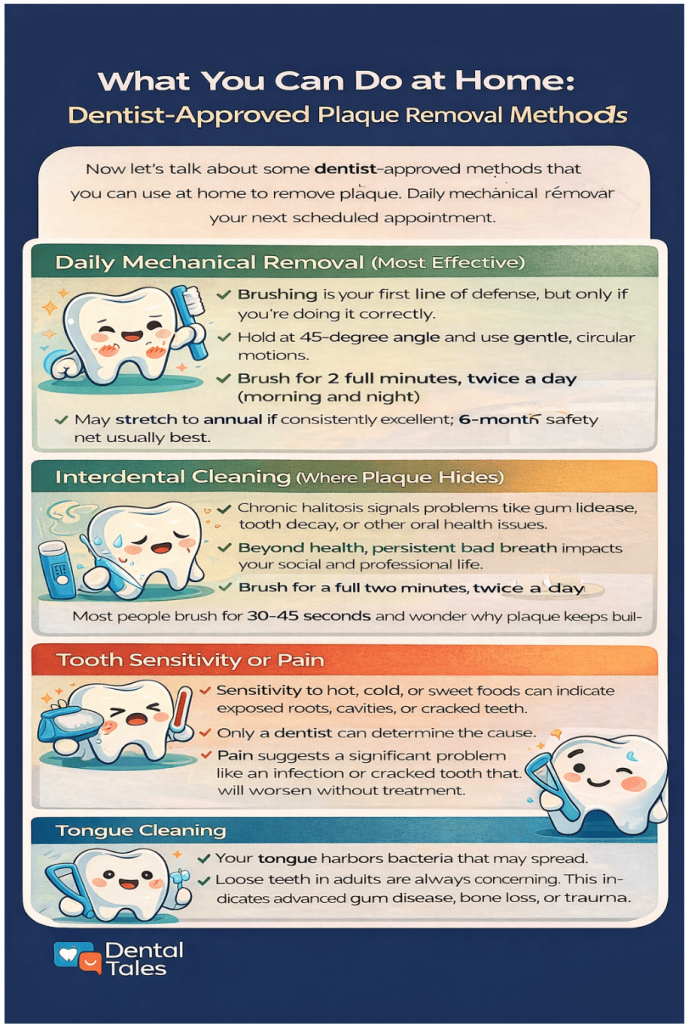
1. Daily Mechanical Removal (Most Effective)
Brushing is your first line of defense, but only if you’re doing it correctly.
Proper brushing technique matters more than the toothbrush brand you buy. Hold your brush at a 45-degree angle to your gums and use gentle, circular motions. Don’t scrub back and forth like you’re cleaning a countertop; that damages your gums and misses plaque.
Brush for a full two minutes, twice a day. Most people brush for 30-45 seconds and wonder why plaque keeps building up. Morning brushing is important, but nighttime brushing is critical. Plaque grows faster when you sleep because saliva production decreases.
2. Interdental Cleaning (Where Plaque Hides)
Brushing alone misses 30-40% of your tooth surfaces. I can’t stress this enough.
The spaces between your teeth are plaque’s favorite hiding spots, and your toothbrush bristles simply can’t reach there. That’s where flossing or interdental brushes come in.
Flossing isn’t optional; it’s essential. If you find traditional floss difficult, try floss picks or water flossers. Interdental brushes work well for people with larger gaps between teeth. Do this once daily, preferably at night before brushing.
3. Tongue Cleaning
Your tongue harbors bacteria that reseed plaque on your teeth. I’ve seen patients with excellent brushing habits still struggle with plaque because they ignore their tongue.
Use a tongue scraper or the back of your toothbrush to gently clean your tongue from back to front. Don’t press too hard; gentleness is key.
Home Remedies: What Works, What Needs Caution, What to Avoid
The Internet is filled with myths and methods that can confuse you. Let me separate fact from internet fiction.
- Low-Risk, Dentist-Approved
- Saltwater rinses help reduce bacteria and soothe inflamed gums, but they don’t physically remove plaque. Think of them as a supportive measure, not a primary solution.
- Oil pulling (swishing coconut or sesame oil) has some traditional backing and may reduce bacteria, but it won’t replace brushing. Realistic expectations are important, but they’re supplementary at best.
Also, make sure to use the right toothpaste. I’ve spoken about which are the best toothpastes in my guide here.
- Use With Caution
- Baking soda can help remove surface plaque due to its mild abrasiveness, but overuse wears down enamel. If you use it, limit it to once or twice a week and don’t scrub aggressively.
- Hydrogen peroxide rinses can reduce bacteria when diluted properly (1-2% concentration). Never use it full-strength, and don’t swallow it.
- Unsafe Myths to Avoid
I’ve seen viral videos showing people scraping plaque with household tools. Please don’t do this.
- Sharp objects, needles, or metal picks will damage your enamel and gums. You’re not equipped to do this safely at home.
- Lemon juice, vinegar, or charcoal are acidic or abrasive and erode enamel over time. These “natural remedies” cause more harm than good.
When Home Care Is No Longer Enough
Home remedies are fine, but you should also know when to seek professional care. You need professional help if you notice:
- Hard, yellowish-brown deposits on teeth (tartar)
- Gums that bleed regularly, even with gentle brushing
- Persistent bad breath despite good hygiene
- Visible buildup along the gumline
Don’t delay professional cleaning in the name of cost savings. The longer you wait, the more extensive (and expensive) the treatment becomes. I’ve seen patients avoid a ₹500-1000 scaling appointment only to need ₹10,000+ treatments for gum disease later.
Conclusion
From my days as a student to my practice today, one truth has never changed: prevention always beats treatment. When done right and daily, at-home plaque control is highly effective, but it isn’t limitless.
Once plaque hardens into tartar, no home remedy, tool, or hack can remove it safely. That’s why smart oral care isn’t about replacing your dentist; it’s about knowing exactly where your responsibility ends, and professional care begins.
Brush properly. Floss daily. Don’t fall for miracle cures that promise what they can’t deliver. Respect your teeth enough to care for them every day and be wise enough to seek professional help when needed.
Frequently Asked Questions (FAQs)
You cannot safely remove hardened plaque (tartar) at home. Once plaque mineralizes into tartar, it requires professional scaling with specialized dental instruments. Attempting to scrape it off yourself risks enamel damage and gum injury.
Yes, you can remove soft plaque through proper daily brushing, flossing, and tongue cleaning. However, tartar removal requires a dentist. Regular home care prevents plaque from hardening, reducing your need for frequent professional cleanings.
You can gently remove soft plaque with proper brushing and flossing, but you should never use sharp objects or metal tools to scrape your teeth. This damages enamel and gums. Leave tartar removal to dental professionals.
Baking soda can help remove surface plaque due to its mild abrasiveness, but it won’t remove tartar. Use it sparingly (1-2 times per week) to avoid enamel erosion. It’s a supplement to brushing, not a replacement.
Common reasons include brushing too quickly, using incorrect technique, skipping interdental cleaning (flossing), or missing the gumline where plaque accumulates. Brushing alone reaches only 60-70% of tooth surfaces; you must floss to remove plaque between teeth.