Sleep grinding (Bruxism), the medical term for grinding or clenching teeth during sleep, is more common than most people realize. Unlike daytime jaw clenching, which you might catch yourself doing, nighttime grinding happens unconsciously. You might wake up with a sore jaw, dull headache, or hear from your partner that you’ve been making grinding sounds through the night.
In India, studies show that sleep grinding affects approximately 9.3% to 14% of the adult population, with even higher rates among students and young professionals.
The good news is that mild to moderate teeth grinding can be managed naturally. This article explained what causes teeth grinding during sleep and simple, natural ways to reduce it, without complicated medical terms and confusing advice.
Key Takeaway
- Grinding teeth during sleep is common, especially among stressed adults and students in India.
- In many cases, it can be reduced naturally by managing stress, improving sleep habits, relaxing jaw muscles, and making small lifestyle changes. Understanding why it happens is the first step to stopping it.
How Common Is Teeth Grinding in India?
Through my practice, I’ve noticed that teeth grinding is significantly underdiagnosed in India. Many patients come in for routine check-ups and are genuinely surprised when I show them the flat, worn edges on their teeth, clear signs of chronic grinding.
Why is it Underdiagnosed?
Most people don’t connect their morning headaches, jaw tightness, or tooth sensitivity to nighttime grinding. Unlike a cavity that causes obvious pain, sleep grinding develops gradually.
Additionally, many Indians prioritize dental visits only when there’s acute pain, missing the preventive window where grinding can be addressed before significant damage occurs.
Long working hours, higher screen time, irregular sleep schedules, and increased stress from competitive academic and professional environments all contribute to the rising prevalence of sleep grinding.
What Is Sleep Bruxism?
Sleep bruxism is the involuntary clenching or grinding of teeth during sleep. Unlike daytime clenching, which people may notice, sleep bruxism usually happens without awareness.
To find if you’re grinding your teeth in your sleep, here are some common signs:
- Waking up with a tight, tired jaw.
- Headaches in the morning.
- Tooth sensitivity to hot or cold.
- Flattened or worn tooth surfaces.
- Clicking or stiffness in the jaw.
In my experience, family members are the first ones to notice the problem. The grinding can be really loud, and I had patients whose spouses moved to another room because of the noise.
Why Does Teeth Grinding Happen During Sleep?
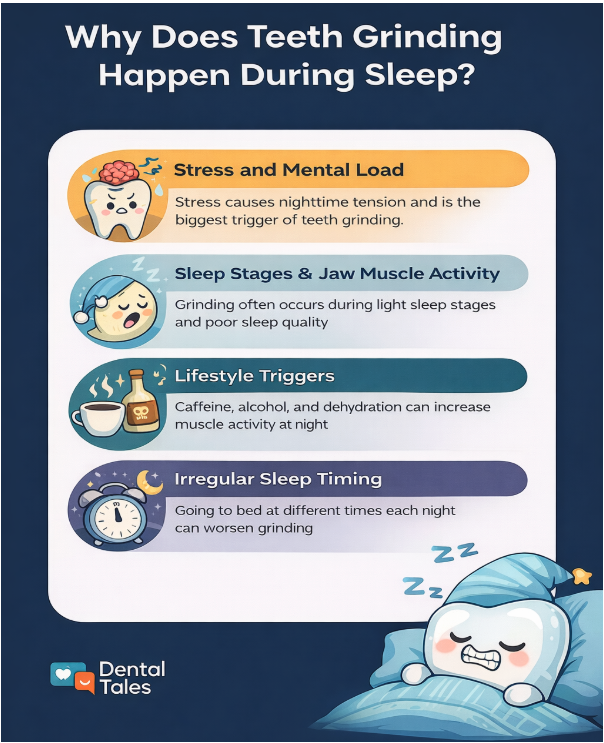
Teeth grinding might not seem like a big deal at first, but in the long term, it can lead to multiple problems. That’s why it’s important to understand the causes of teeth grinding, so that it doesn’t become a major problem. Let me break down the causes:
- Stress and Mental Load
Stress is the biggest trigger of sleep grinding. When you’re stressed, your body stays active at night, and the nervous system remains tense. This tension often shows up as jaw clenching or grinding during sleep.
That’s why students who are preparing for competitive exams and young professionals working in high-pressure jobs are most affected.
- Sleep Stages and Jaw Muscle Activity
Teeth grinding usually happens during lighter stages of sleep, particularly during transitions between sleep cycles. When sleep quality is poor, or when waking during the night increases the chances of grinding.
There’s also a connection between sleep grinding and sleep disorders. People with sleep apnea, for instance, have higher chances of teeth grinding.
- Lifestyle Triggers That Worsen Night Grinding
There are certain daily habits that can directly impact the symptoms of sleep grinding:
- Caffeine: Consuming coffee, tea, or energy drinks, especially in the afternoon or evening, can keep your nervous system stimulated into the night. This can increase muscle activity during sleep, including jaw clenching.
- Alcohol: While alcohol might make you feel sleepy initially, it can disrupt your sleep routine and increase muscle activity during the night. Many people notice worse grinding after drinking.
- Dehydration: Inadequate intake of water can increase muscle cramping and tension, which can worsen the symptoms of sleep grinding.
- Irregular sleep timing: Going to bed at different times each night can prevent your body from establishing a consistent sleep pattern, often resulting in poorer sleep quality and more grinding.
Natural Ways to Stop Grinding Teeth in Sleep
Rather than focusing on the generic tips and tricks of treating sleep grinding, I’ll give you a symptom-specific approach.
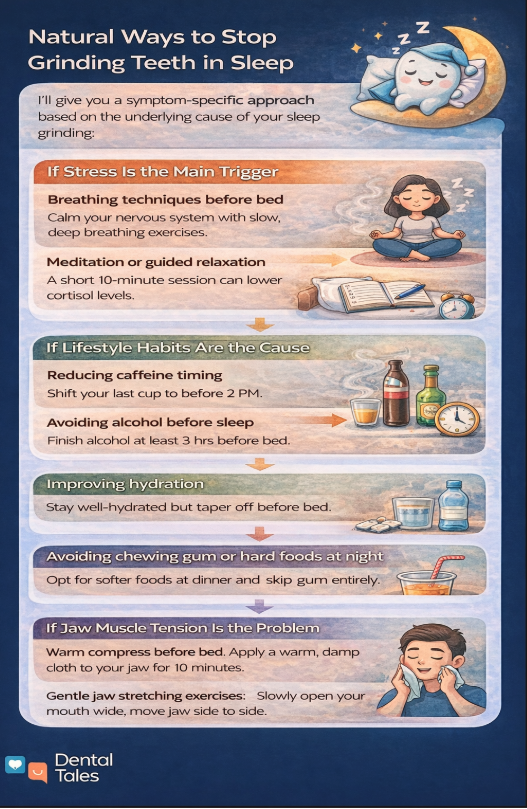
If Stress Is the Main Trigger
If stress is the main reason for your sleep grinding, then the goal is to calm your nervous system before sleep and reduce overall stress levels. You can follow this routine:
- Breathing techniques before bed: By inhaling slowly through your nose for a count of four, holding briefly, then exhaling through your mouth for a count of six, you can activate your nervous system. I recommend doing this for just five minutes before bed.
- Meditation or guided relaxation: Even a short 10-minute session can reduce your cortisol levels. You can also use apps with sleep-specific meditations, or you can simply lie down and relax each muscle group from your toes upward.
- Journaling or screen detox: If your mind races when you lie down, try writing out tomorrow’s tasks or your current worries before bed. This “brain dump” helps with anxious and negative thoughts. Simultaneously, reducing screen time in the final hour before sleep prevents the stimulating effects of blue light and mental engagement.
If Lifestyle Habits Are the Cause
Making small adjustments in your daily routines can have a surprisingly large impact on sleep grinding.
- Reducing caffeine timing: Instead of leaving caffeine entirely (which many people find unrealistic), shift your last cup to before 2 PM. This gives your body time to metabolize most of the stimulant before bedtime.
- Avoiding alcohol before sleep: If you drink, try to finish at least three hours before bed. This allows the effects on the sleep routine to diminish.
- Improving hydration: Aim to drink adequate water throughout the day, but taper off in the final hour before bed to avoid nighttime bathroom trips that affect sleep.
- Avoiding chewing gum or hard foods at night: These keep your jaw muscles activated and in a pattern of repetitive motion. Go for softer foods at dinner and avoid gum entirely if you’re prone to grinding.
If Jaw Muscle Tension Is the Problem
When the physical tension in your jaw muscles is noticeable, it’s advisable to go for direct relaxation techniques to get relief.
- Warm compress before bed: Applying a warm, damp cloth to both sides of your jaw for 10 minutes can help you relax the masseter muscles (the main chewing muscles). The warmth increases blood flow and releases tension.
- Gentle jaw stretching exercises: Simple movements can reduce muscle tightness:
- Slowly open your mouth as wide as comfortable, hold for 5 seconds, then close.
- Move your jaw gently from side to side.
- Place your tongue on the roof of your mouth and slowly open. your jaw while keeping your tongue in place.
Do these for just 2-3 minutes before bed.
- Jaw massage techniques: Using your fingertips, apply gentle circular pressure to the masseter muscles (you’ll feel these bulge when you clench your teeth). Work from the angle of your jaw up toward your cheekbones. This self-massage takes only a few minutes but can reduce overnight tension.
Short-Term Relief vs Long-Term Prevention
| Focus Area | What Helps Tonight (Short-Term Relief) | What Prevents Grinding Over Time (Long-Term Prevention) |
| Stress Control | Deep breathing before bed | Daily stress management through meditation or relaxation |
| Jaw Muscle Relaxation | Warm compress on the jaw | Regular jaw stretching and gentle massage |
| Pain & Tightness | Light jaw massage before sleep | Consistent muscle relaxation habits |
| Sleep Quality | Avoid caffeine or alcohol at night | Fixed sleep and wake-up timing every day |
| Mental Calmness | Reducing screen time before bed | Building a calming bedtime routine |
| Oral Habits | Avoid chewing gum at night | Breaking daytime clenching habits |
| Hydration | Drinking enough water in the evening | Staying hydrated throughout the day |
Teeth Grinding in Children: What Parents Should Know
As a dentist, I often reassure worried parents that teeth grinding in children is quite common and usually temporary.
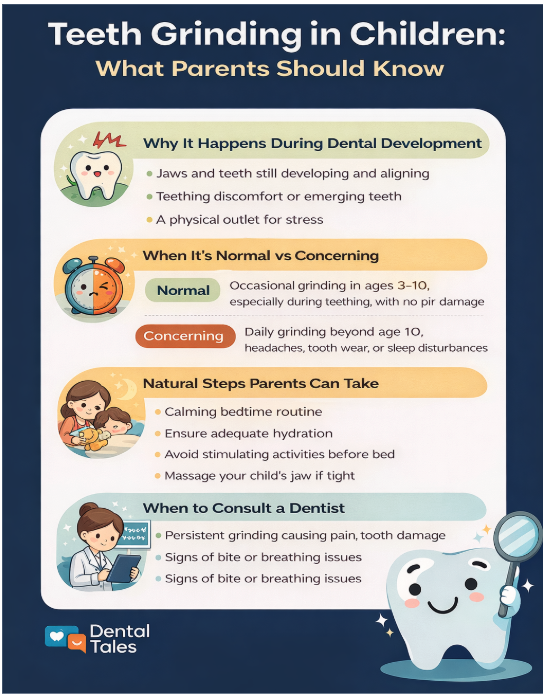
Why It Happens During Dental Development
Children grind their teeth for several reasons:
- Their jaws and teeth are still developing and finding proper alignment.
- It’s a response to discomfort from teething or emerging teeth.
- Children process stress differently from adults, and grinding can be their physical outlet.
When It’s Normal vs Concerning
- Normal: Occasional grinding in children ages 3-10, especially during periods of teething, with no pain or tooth damage.
- Concerning: Daily grinding that continues beyond age 10, grinding accompanied by headaches or jaw pain, visible tooth wear, or grinding linked with sleep disturbances like snoring or gasping.
Natural Steps Parents Can Take
- Establish a calming bedtime routine to reduce stress
- Ensure adequate hydration throughout the day
- Avoid stimulating activities or screens before bed
- Gently massage your child’s jaw if they complain of tightness
When to Consult a Dentist
If grinding continues even after the development time and causes pain or results in noticeable tooth damage, a dental evaluation is important. Sometimes children grind due to bite alignment issues or enlarged tonsils affecting breathing, both of which are treatable conditions.
The Bottom Line
Teeth grinding during sleep is common, especially in today’s stressful and fast-paced lifestyle. Through my years of practice, I’ve seen how this condition impacts not just dental health but overall quality of life, from disrupted sleep to chronic pain and damaged teeth. The good news is that many people can reduce or stop it naturally by managing stress, improving sleep habits, and relaxing jaw muscles.
Understanding the cause is the key. Small, consistent changes often make a big difference, and acting early can protect both your teeth and your overall comfort.
FAQs
Yes. Stress is one of the most common causes of sleep bruxism. When you are stressed, your nervous system stays active even during sleep, which can trigger jaw clenching and grinding. This is why teeth grinding often increases during exam periods, work pressure, or emotional stress.
Many people notice some improvement within 2 to 3 weeks if they follow natural remedies consistently. Short-term methods like warm compresses may help the same night, but long-term improvement depends on regular stress control, better sleep habits, and lifestyle changes.
Teeth grinding is not dangerous at first, but long-term grinding can cause problems. These include worn enamel, tooth sensitivity, jaw pain, headaches, and in some cases jaw joint issues. Early action can help prevent permanent damage.
Dehydration does not directly cause teeth grinding, but it can make it worse. Lack of water increases muscle tension and can disturb sleep quality, both of which may increase nighttime grinding. Staying well hydrated supports healthy muscle function.
Yes, teeth grinding is very common among students. High academic stress, irregular sleep schedules, long screen time, and caffeine intake all increase the risk. Many students experience grinding during exams or high-pressure periods without realizing it.